
Replacing Failing Bonding With A Composite Veneer
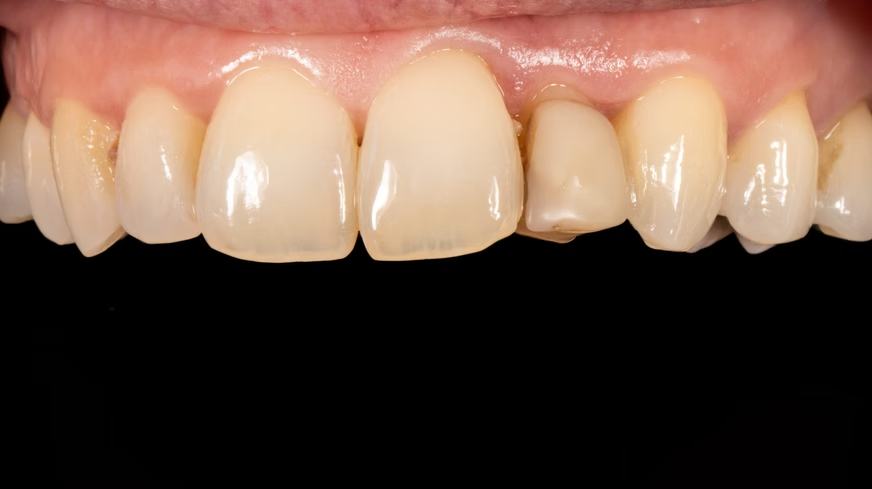
Failing front-tooth bonding rebuilt with a hand-sculpted composite veneer at SOL Dental Arts in Maspeth, Queens.
Replace Failing Bonding With Composite Veneer
Case focused on upgrading worn or failing bonding with a more refined and natural-looking composite veneer.
Older composite bonding can chip, stain, or lose its polish over time. This case at SOL Dental Arts in Maspeth, Queens shows how failing front-tooth bonding can be replaced with a composite veneer, a more comprehensive restoration that covers the visible surface of the tooth.
Upgrading the restoration allows the contour, shade, edge form, and finish to be refined while keeping treatment conservative. The goal is a natural-looking result that restores polish and blends with the surrounding smile.
What Was Done?
- Assessment of the failing bonding
- Removal of old composite material
- Composite veneer placement
- Final shaping, finishing, and polish
How We Do It
When older bonding has worn or discolored, replacing it with a composite veneer can refresh the tooth’s appearance in a single visit.

Frequently Asked Questions
Why Does Composite Bonding Need To Be Replaced?
Over time, bonding can stain, chip, or lose its polish. Replacing it restores appearance and surface quality.
What Is The Difference Between Bonding & A Composite Veneer?
Bonding usually repairs a localized area, while a composite veneer covers more of the visible tooth surface for a more comprehensive result.
Is Replacing Bonding Conservative?
Yes. The treatment generally focuses on the existing restoration and visible surface while preserving healthy tooth structure.
Related Treatment Resources
For treatment context, explore composite bonding, emergency dentist care, same-day chipped front tooth bonding, and the dental emergency guide for Maspeth and Queens.
Ask About A Similar Result
Every smile and treatment plan is individual. Meet our dentists or request an appointment to discuss what may be appropriate for you. You can also call our office. Individual results vary.
Clinical Rationale & Diagnostic Evaluation
When localized bonding begins to show signs of breakdown along its margins, replacing only a small patch often fails to deliver long-term aesthetic integration. Over time, micro-leakage and surface staining around older resin interfaces can cause noticeable dark borders or uneven surface texture. Upgrading from a localized patch repair to a full direct composite veneer allows for a complete, uniform re-surfacing of the front face while keeping the underlying natural enamel intact.
At SOL Dental Arts in Maspeth, NY, our diagnostic protocol ensures that the tooth structure beneath failing restorations remains healthy and structurally uncompromised. Before removing old composite resin, our doctors evaluate high-resolution digital intraoral photographs and review low-dose digital x-rays to verify root stability, check for hidden recurrent decay, and confirm nerve vitality. This diagnostic evaluation ensures that your new restoration rests on a clean, solid, and disease-free foundation.

Critical Considerations Before Upgrading Aged Restorations
- Evaluating the total surface area of natural enamel remaining for optimal micro-mechanical bonding
- Checking static and dynamic chewing forces to ensure the new veneer edge avoids heavy biting interference
- Inspecting surrounding tissue health to maintain a completely dry, moisture-controlled bonding surface
- Assessing natural translucency gradients in adjacent teeth to select ideal dentin and enamel resin shades
Precision Hand-Sculpting & Polishing Workflow
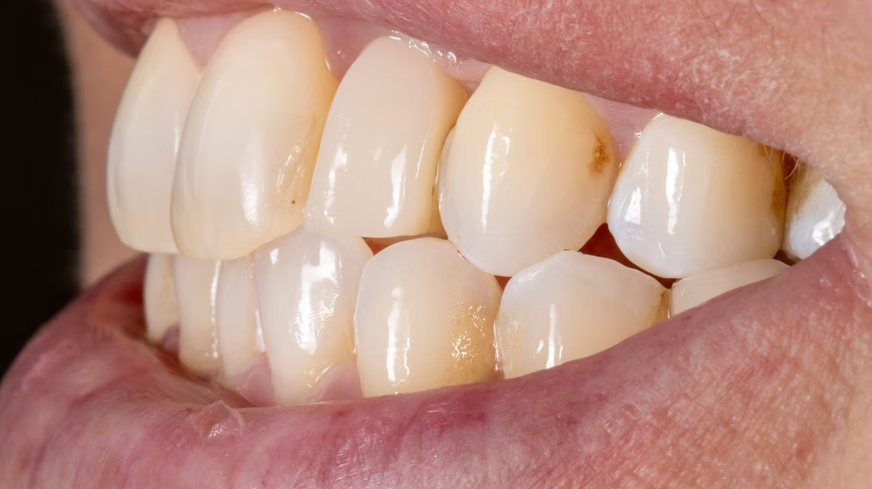
Crafting a full composite veneer chairside requires an advanced understanding of light dynamics, surface micro-texture, and tooth anatomy. Natural central and lateral incisors feature intricate optical depth, combining opaque dentin layers with translucent enamel margins. Applying a single shade of composite resin across the entire front surface would result in an opaque, unnatural appearance.
During your visit to our office in Maspeth, NY, our doctors meticulously hand-sculpt high-density nano-hybrid composite resin using a multi-layering technique. Dentin-shaded resins are placed first to block out underlying discoloration, followed by delicate, translucent enamel layers that reflect light identically to natural teeth. Specialized fine diamond burs, flexible contouring discs, and multi-stage polishing pastes are used to create realistic line angles and a glass-like shine that resists daily food and beverage staining.
Best Practices For Caring For Direct Composite Veneers
- Brush twice daily with a soft-bristled toothbrush and non-abrasive fluoride toothpaste to maintain surface gloss
- Floss daily along interproximal margins using smooth, gentle movements to protect surrounding soft tissues
- Avoid using your restored front teeth to open packaging, bite fingernails, or chew on hard ice
- Wear a custom-fitted nightguard during sleep if you exhibit signs of clenching or grinding to cushion composite edges from shear stress
- Attend regular professional check-ups so our team can monitor restoration integrity, evaluate tissue health, and repolish composite surfaces as needed