
Partial-Coverage Crowns, Onlays & Inlays
Partial-coverage crowns, onlays, and inlays in Maspeth, Queens, are used to rebuild damaged teeth while preserving healthy tooth structure.
Partial-Coverage Crowns, Onlays & Inlays
Partial-coverage crowns, onlays, and inlays are used when a tooth needs more support than a filling but does not require a full crown. This conservative approach can rebuild strength, shape, and function while preserving more healthy tooth structure. At SOL Dental Arts in Maspeth, Queens, these restorations are planned around the remaining enamel, bite, and long-term durability.
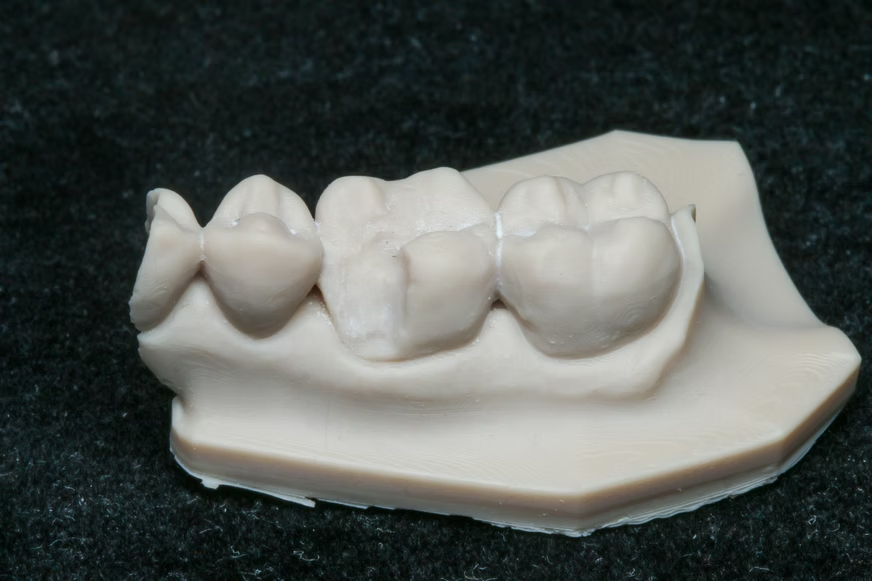
When a tooth has a larger fracture, failing restoration, or weakened cusp, the right answer is not always a full crown. Partial-coverage restorations can protect the damaged area while keeping more natural tooth intact. This case highlights a minimally invasive restorative approach for rebuilding function and appearance without over-reducing healthy structure.
What Was Done?
- Assessment of the damaged tooth and remaining structure
- Conservative preparation that preserves healthy tooth
- Records taken for a custom indirect restoration
- Bonding of the inlay or onlay and final adjustment
How We Do It
Partial-coverage restorations rebuild damaged teeth while conserving more healthy structure than a full crown.
Frequently Asked Questions
What Is The Difference Between An Onlay & A Crown?
An onlay covers the damaged or weakened portion of a tooth while preserving more healthy tooth structure than a full crown when the case allows.
When Is An Inlay Or Onlay Recommended?
An inlay or onlay may be recommended when a tooth needs more strength or coverage than a filling, but does not need a full crown.
Why Choose Partial Coverage?
The goal is to restore strength, shape, and function while conserving as much natural tooth as possible.

Related Treatment Resources
For treatment context, explore dental crowns and bridges, emergency dentist care, dental onlays and inlays in Maspeth, and the dental emergency guide for Maspeth and Queens.
Ask About A Similar Result
Every smile and treatment plan is individual. Meet our dentists or request an appointment to discuss what may be appropriate for you. You can also call our office. Individual results vary.
Preserving Natural Tooth Structure Through Biomechanical Design
Modern biomimetic dentistry prioritizes protecting healthy enamel and dentin rather than aggressively grinding teeth down for full-coverage caps. When a molar or premolar suffers structural damage, traditional crown preparation requires removing significant portions of sound enamel near the gumline. Inlays, onlays, and partial-coverage crowns eliminate this unnecessary loss of healthy structure by restoring only the compromised grooves or weakened cusps.
At SOL Dental Arts in Maspeth, NY, our diagnostic protocol centers on preserving natural tooth mechanics. By keeping margin preparations well above the delicate gumline, our doctors protect surrounding soft tissues and maintain natural tooth flexibility. Utilizing advanced intraoral scanning and low-dose digital x-rays, our team ensures that underlying root structures, pulp vitality, and bone levels are completely healthy before placing indirect restorations.

Key Advantages Of Partial-Coverage Restoration Design
- Preserving healthy, native enamel borders to maintain original tooth strength and flexural durability
- Keeping preparation margins well above the gumline to prevent tissue inflammation and simplify home cleaning
- Eliminating internal stress concentrations through custom ceramic or composite geometries
- Utilizing low-dose digital x-rays to verify underlying nerve health and root integrity prior to bonding
High-Strength Materials & Adhesive Cementation Workflow
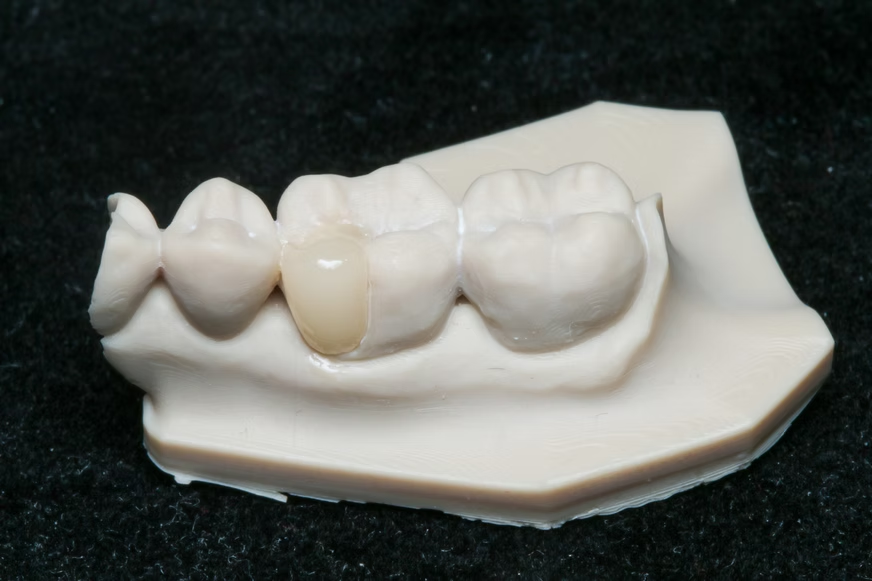
Custom inlays, onlays, and partial-coverage crowns are fabricated using durable lithium disilicate (E-max) or high-translucency ceramic materials. Unlike traditional silver amalgams or basic fillings that sit passively inside a tooth cavity, bonded ceramic restorations fuse directly to the remaining enamel walls. This adhesive integration braces the tooth structure, restoring up to ninety percent of its original structural stiffness.
During your placement visit at our office in Maspeth, NY, the target tooth is isolated to establish a pristine, moisture-free field for bonding. The custom ceramic restoration is trial-fitted, checked against your chewing movements, and bonded into place using high-strength adhesive resin cements. Our team then hand-polishes all restoration borders, ensuring a smooth transition that allows dental floss to slide effortlessly without catching.
Best Practices For Caring For Bonded Inlays & Onlays
- Brush twice daily with a soft-bristled toothbrush and non-abrasive fluoride toothpaste to maintain surface smoothness
- Floss daily around restored tooth margins using smooth, curved movements to protect surrounding gum tissue
- Wear a custom laboratory nightguard during sleep if you exhibit signs of nighttime grinding or clenching
- Avoid chewing directly on exceptionally hard items like ice or unpopped popcorn kernels to protect ceramic edges
- Attend routine professional check-ups so our team can evaluate bond integrity, inspect tissue adaptation, and repolish surfaces