
Chipped Lower Incisor Restored With Bonding
See how conservative composite bonding restored a chipped lower front tooth with natural contour, polish, and smile symmetry in Maspeth, Queens.
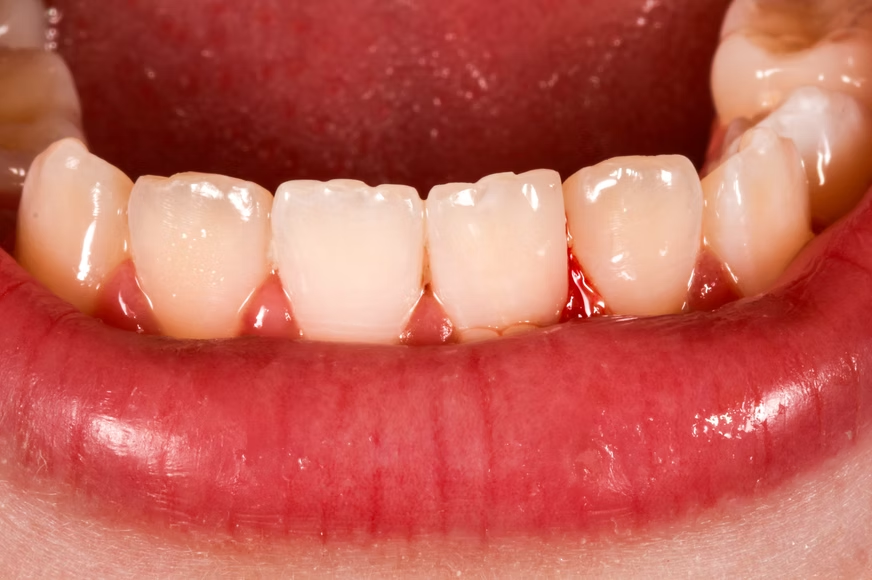
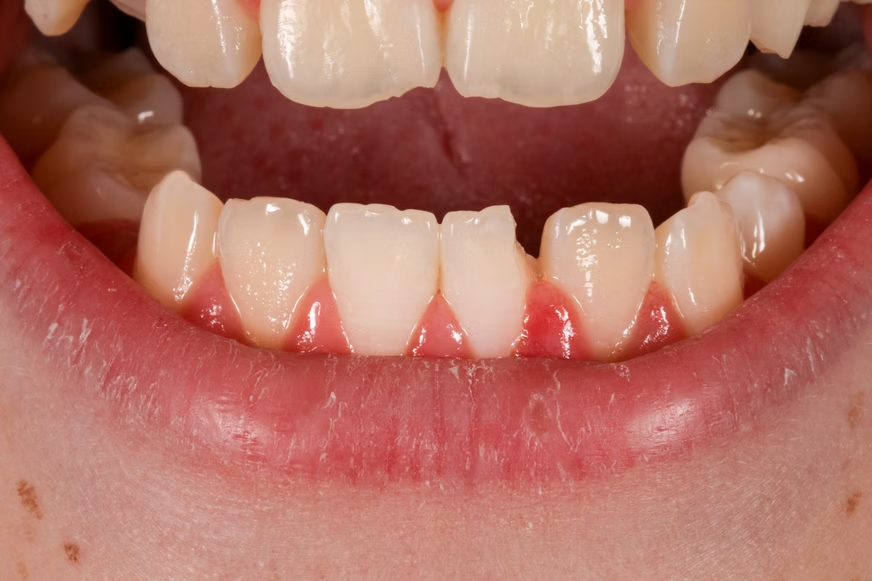
Composite Bonding – A Chipped Mandibular Incisor
A chipped lower front tooth can affect smile symmetry, bite comfort, and overall dental aesthetics. This case highlights minimally invasive composite bonding in Maspeth, Queens, to rebuild a chipped mandibular incisor, restore natural contours, and create a smooth, polished finish that blends seamlessly with the surrounding teeth.
This chipped mandibular incisor bonding case at SOL Dental Arts in Maspeth, Queens demonstrates how conservative composite repair can restore a lower front tooth with improved contour, polish, and smile balance. Although lower incisors are less prominent than upper centrals, they still play an important role in speech, bite function, and the overall appearance of the smile. A chip in this area can create roughness, asymmetry, and unwanted wear patterns.
Conservative bonding can rebuild the damaged edge while preserving healthy structure and restoring a more refined appearance.
What Was Done?
- Assessment of chipped lower incisor
- Composite bonding repair
- Natural contour reconstruction
- Final finishing and polish
How We Do It
When the damage is localized to a lower front tooth, bonding often provides an efficient and conservative restorative solution.
Frequently Asked Questions
Are Lower Front Teeth Important Esthetically?
Yes. They affect smile balance and become especially visible in speech and close conversation.
Can A Small Lower Incisor Chip Be Bonded?
Yes. Bonding is commonly used for localized anterior defects.
Will The Repair Feel Smooth Afterward?
That is typically one of the key goals of the restoration.
Related Treatment Resources
For treatment context, explore composite bonding, emergency dentist care, same-day chipped front tooth bonding, and the dental emergency guide for Maspeth and Queens.
Ask About A Similar Result
Every smile and treatment plan is individual. Meet our dentists or request an appointment to discuss what may be appropriate for you. You can also call our office. Individual results vary.
Functional Occlusion & Diagnostic Protocols For Lower Incisors
Mandibular incisors are among the smallest teeth in the dental arch, yet they absorb continuous shear stress during speech and biting. Because of their thin layer of protective enamel, even a minor chip on a lower front tooth can expose underlying dentin, leading to sudden temperature sensitivity and sharp, rough edges that irritate the tongue. Addressing this damage effectively requires evaluating how the lower teeth slide against the upper incisors during normal jaw movements.
At SOL Dental Arts in Maspeth, NY, our diagnostic protocol begins with a comprehensive assessment of your static and dynamic bite. Before applying any restorative material, our doctors utilize low-dose digital x-rays and high-magnification intraoral cameras to verify that the tooth root, pulp tissue, and surrounding bone remain uninjured. Identifying heavy contact points allows us to shape the new restoration so it avoids excessive biting pressure, protecting the repair from premature dislodgement.

Critical Diagnostic Steps In Lower Incisor Restoration
- Checking anterior guidance and crossover jaw movements to prevent heavy forces on newly restored incisal edges
- Reviewing low-dose digital x-rays to verify root integrity and rule out unseen subgingival fractures
- Isolating the lower incisor meticulously to prevent saliva contamination and ensure a maximum strength micro-mechanical bond
- Selecting nano-hybrid composite materials specifically formulated to withstand continuous edge wear while maintaining a high gloss

Micro-Layering Technique & Precision Edge Sculpting
Rebuilding the incisal edge of a lower front tooth requires delicate hand-sculpting and an exact match of tooth shade and opacity. Lower incisors frequently feature delicate incisal translucency and subtle halo effects along their biting edges. Applying a single uniform composite shade can result in a flat, unnatural appearance that stands out when speaking.
During your visit to our practice in Maspeth, NY, our clinical team hand-sculpts high-density composite resin in micro-layers, carefully matching the natural shade gradient of your surrounding teeth. Specialized fine diamond burs and flexible contouring discs are used to recreate smooth line angles. The final restoration is thoroughly polished using multi-stage pastes, yielding a glass-like surface that glides smoothly against your lips and tongue and resists everyday food staining.
Best Practices For Extending The Lifespan Of Lower Bonding Repairs
- Brush twice daily with a soft-bristled toothbrush and non-abrasive fluoride toothpaste to maintain surface polish
- Floss daily between lower incisors using gentle movements to protect interproximal composite margins
- Avoid biting fingernails, tearing open packaging, or crunching hard objects with your front teeth
- Wear a custom-fitted nightguard if you show signs of nighttime grinding or clenching to shield bonded edges from excess force
- Schedule regular professional check-ups so our team can evaluate bond margins, inspect tissue health, and repolish restorations as needed