
Implant Crowns
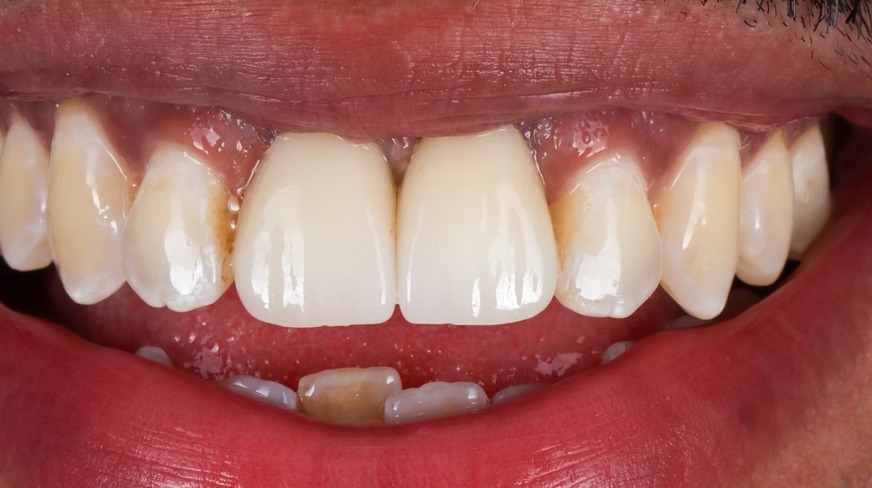
Implant crown restoration in Maspeth, Queens, replacing a missing tooth with a fixed crown designed to match neighboring teeth.
Implant Crowns
Restorative implant crown treatment designed to replace missing teeth with natural-looking function and esthetics.
Implant crowns replace missing teeth with restorations designed for natural appearance, stable function, and a comfortable bite. This implant crown case at SOL Dental Arts in Maspeth, Queens highlights restorative planning focused on matching the surrounding teeth in shape, shade, and contour.
Because an implant crown sits next to natural teeth, the final result depends on careful design of emergence profile, contact points, and bite. The goal is a fixed replacement that looks like part of the smile rather than a separate restoration.
What Was Done?
- Assessment of the implant site and neighboring teeth
- Shade and shape matching to the natural teeth
- Fabrication of a custom implant crown
- Seating and bite adjustment of the final crown
How We Do It
An implant crown replaces a missing tooth with a fixed, natural-looking restoration without affecting the neighboring teeth.
Frequently Asked Questions
What Is An Implant Crown?
An implant crown is the visible tooth-like restoration attached to a dental implant after the implant is ready to be restored.
Do Implant Crowns Look Natural?
They are designed to match neighboring teeth in shape, shade, contour, and bite so the replacement tooth blends into the smile.
Why Choose An Implant Crown?
An implant crown can replace a missing tooth with a fixed restoration without reshaping the neighboring teeth as a bridge would.

Related Treatment Resources
For treatment context, explore dental implant restorations, dental crowns and bridges, dental implant planning in Queens, and the zirconia implant bridge case guide.
Ask About A Similar Result
Every smile and treatment plan is individual. Meet our dentists or request an appointment to discuss what may be appropriate for you. You can also call our office. Individual results vary.
Precision Architecture & Emergence Profile Design
Designing a custom implant crown requires a refined understanding of soft tissue architecture and subgingival contours. Unlike a natural tooth anchored by a periodontal ligament, a dental implant integrates directly into the jawbone. Recreating a believable tooth profile depends on managing the emergence profile—the transitional zone where the restoration extends through the gumline. If the crown contour is too bulky or under-contoured, it can cause food impaction, soft tissue irritation, or dark shadows around the base of the tooth.
At SOL Dental Arts in Maspeth, NY, our doctors focus heavily on custom abutment design and soft tissue molding. By shaping the surrounding tissue using provisional restorations or customized digital abutments, we ensure the final ceramic crown emerges seamlessly from the gums just like natural enamel. This precise attention to tissue adaptation preserves healthy papillae, closes unwanted black triangles, and protects the surrounding bone structure from bacterial accumulation.

Critical Engineering Factors In Custom Implant Restorations
- Customizing titanium or zirconia abutments to support surrounding tissue and match natural root angles
- Calculating exact interproximal contact pressure so adjacent natural teeth remain stable without jamming
- Analyzing chewing dynamics and lateral forces to prevent excessive biting stress on the underlying implant fixture
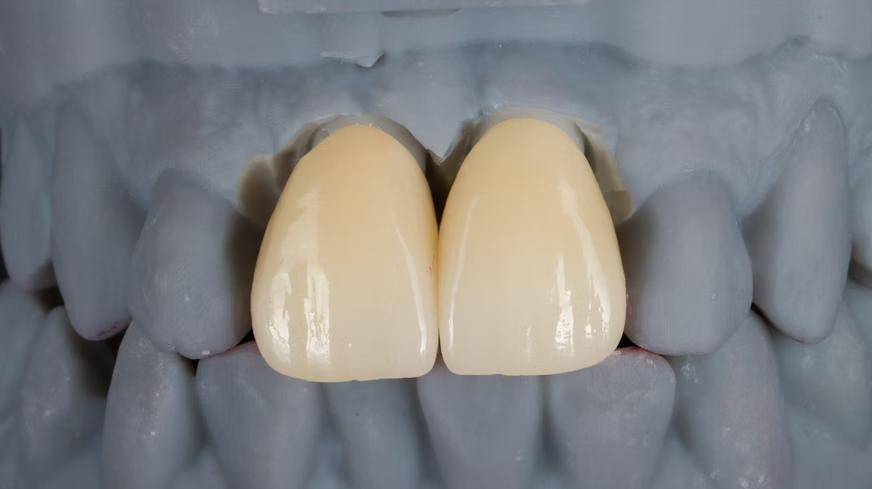
- Selecting high-translucency zirconia or layered porcelain to replicate the light reflection of adjacent natural teeth
Advanced In-House Digital Workflow & Delivery
The process of restoring a dental implant at our office in Maspeth, NY is built around accuracy, comfort, and state-of-the-art digital technology. Rather than using conventional goopy impression trays that can cause gagging, our team utilizes high-precision intraoral digital scanners to capture a 3D optical footprint of your bite and implant location. Before finalizing the restoration, low-dose digital x-rays are taken to verify complete structural seating and evaluate peri-implant bone levels.
Through our integrated CAD/CAM digital capabilities, we design and evaluate every custom crown to ensure micrometric accuracy. Screw-retained designs are prioritized whenever clinically feasible, eliminating the need for excess dental cement near the gumline and drastically reducing the risk of localized tissue inflammation. Once seated, our doctors meticulously refine the biting surface so your restored implant integrates seamlessly into daily speech and mastication.
Guidelines For Maintaining Long-Term Implant Health
- Clean around the implant base daily using specialized non-waxed floss, interdental brushes, or water flossers
- Brush twice a day with a soft-bristled toothbrush and low-abrasive fluoride toothpaste to protect ceramic surfaces
- Wear a custom-fitted nightguard during sleep if you exhibit signs of clenching or grinding to prevent porcelain chipping
- Schedule regular professional check-ups so our team can evaluate screw tightness, monitor surrounding tissue health, and perform routine maintenance