
Composite Bonding For A Crossbite Canine | Queens
How our team used composite bonding to bring an upper canine in crossbite back into the smile line — a real case from SOL Dental Arts in Maspeth, Queens.
Reshaping A Canine In Crossbite With Composite Bonding
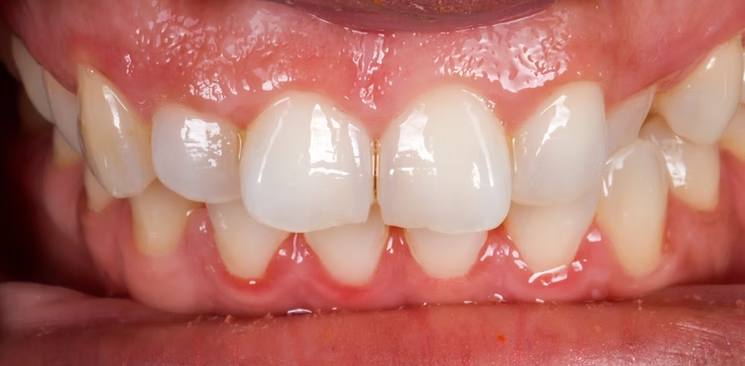
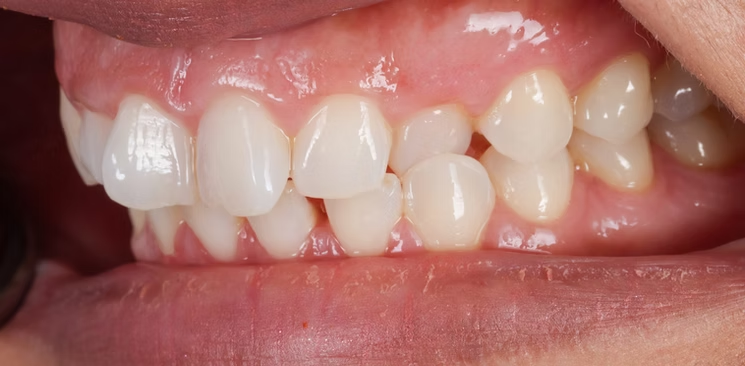
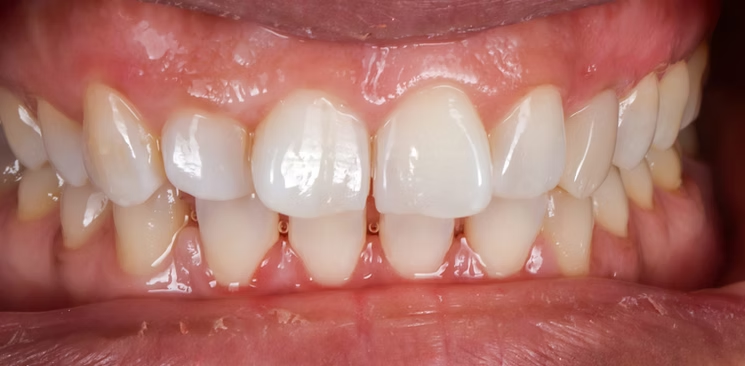
An upper left canine that sat behind the bite — in crossbite — was reshaped and brought into the smile line with minimally invasive composite bonding, in a single visit. Cosmetic bonding in Maspeth, NY.
This patient had an upper canine tucked behind the neighboring teeth, biting inside the lower teeth (a crossbite) and leaving a shadowed, recessed spot in the smile line. Our team used direct composite bonding — tooth-colored resin sculpted by hand — to build the tooth out into the arch so it lines up with its neighbors. It is an additive, conservative approach: little or no natural tooth is removed, and the work is done chairside.
Bonding reshapes and builds a tooth where it stands; it does not move teeth or change the bite — orthodontics is the route for that. Individual results vary.
What Was Done?
- Assessment of the upper left canine in crossbite
- Shade matching to the surrounding teeth
- Direct composite bonding to build the tooth out into the arch
- Hand-sculpting and polishing in a single visit
How We Do It
The patient wanted the tooth to look like it belonged in the smile line without going through orthodontic treatment. Composite bonding was a minimally invasive way to even out the appearance — additive, completed in one visit, and more conservative than options that remove tooth structure. For physically repositioning teeth or correcting the bite itself, braces or clear aligners remain the option. Located in Maspeth, NY, our office is here to help walk you through your options.
Frequently Asked Questions
Can Composite Bonding Fix A Crossbite?
Bonding can improve how a tooth in crossbite looks by building it out into the smile line, but it does not move teeth or change the bite itself. Orthodontics (braces or clear aligners) is what actually repositions teeth.
Is Any Tooth Removed For Bonding?
Usually little or none — composite bonding is additive, which makes it one of the more conservative and reversible cosmetic options.
How Long Does Composite Bonding Last?
It varies. Composite can chip or pick up stain over time and may need occasional polishing, repair, or eventual replacement; porcelain is a longer-lasting alternative.
Related Treatment Resources
For treatment context, explore composite bonding, Invisalign and clear aligners, smile makeover planning, the education guide on bonding a canine in crossbite, and our comparison of composite bonding vs porcelain veneers.
Ask About A Similar Result
Every smile and treatment plan is individual. Meet our dentists or request an appointment to discuss what may be appropriate for you. You can also call our office. Individual results vary.
Biomechanical Mechanics & Diagnostic Considerations For Anterior Crossbites
Addressing a lingually displaced canine through illusion bonding requires a comprehensive clinical evaluation of occlusal guidance and functional jaw clearance. When an upper canine sits within the lower arch, it lacks the standard canine guidance that normally protects the back teeth during chewing. Building up the facial surface of a crossbite tooth increases its thickness, making pre-treatment occlusion planning essential to avoid destructive biting contacts with the lower teeth.
At SOL Dental Arts in Maspeth, NY, our diagnostic protocol incorporates detailed bite registration, intraoral photo documentation, and low-dose digital x-rays. By evaluating root angle, bone thickness, and pulpal health prior to placing resin, our doctors confirm that the tooth root is stable. This diagnostic rigor ensures that building out the facial contour establishes a harmonious visual arch alignment while protecting both the underlying tooth structure and surrounding gum tissues.

Diagnostic Benchmarks For Aesthetic Crossbite Masking
- Checking static bite contacts and dynamic jaw movements to ensure the composite resin avoids heavy occlusion
- Reviewing low-dose digital x-rays to evaluate root position, periodontal ligament space, and bone support
- Assessing enamel thickness on the facial surface to ensure maximum micro-mechanical adhesive bonding strength
- Isolating the target tooth with precise moisture barriers to establish an ideal environment for resin placement
Advanced Hand-Sculpting & Single-Visit Finishing Protocol
Rebuilding a recessed upper canine to align visually with central and lateral incisors requires sophisticated material layering and light-refraction principles. Canines possess higher color saturation and thicker dentin cores than adjacent lateral incisors. Using a single composite shade across the entire facial surface often yields an artificial or opaque appearance.
During treatment at our office in Maspeth, NY, our team hand-sculpts high-density nano-hybrid composite materials using a micro-layering technique. Saturated dentin shades are built first to establish depth, followed by custom translucent enamel layers that capture natural ambient light. Fine diamond burs and multi-stage polishing pastes refine line angles and recreate surface micro-texture, producing a high-gloss finish that glides comfortably against the upper lip and resists daily food staining.
Long-Term Care Guidelines For Crossbite Restorations
- Brush twice daily with a soft-bristled toothbrush and non-abrasive fluoride toothpaste to maintain surface luster
- Floss daily along interproximal margins using gentle, curved movements to protect surrounding soft tissues
- Refrain from using restored front teeth or canines to tear open packaging, bite fingernails, or crunch on hard ice and candy
- Wear a custom-fitted laboratory nightguard during sleep if you show signs of nighttime grinding or clenching
- Schedule regular professional check-ups so our team can evaluate bond margins, inspect tissue health, and repolish composite surfaces