
Cervical Lesion Treatment for Abfraction & Decay
Explore treatment for cervical lesions, abfraction, erosion, and decay at SOL Dental Arts in Maspeth, Queens.
Cervical Lesion Treatment
Tooth-colored restorative treatment for sensitive or damaged cervical tooth areas affected by wear or decay.
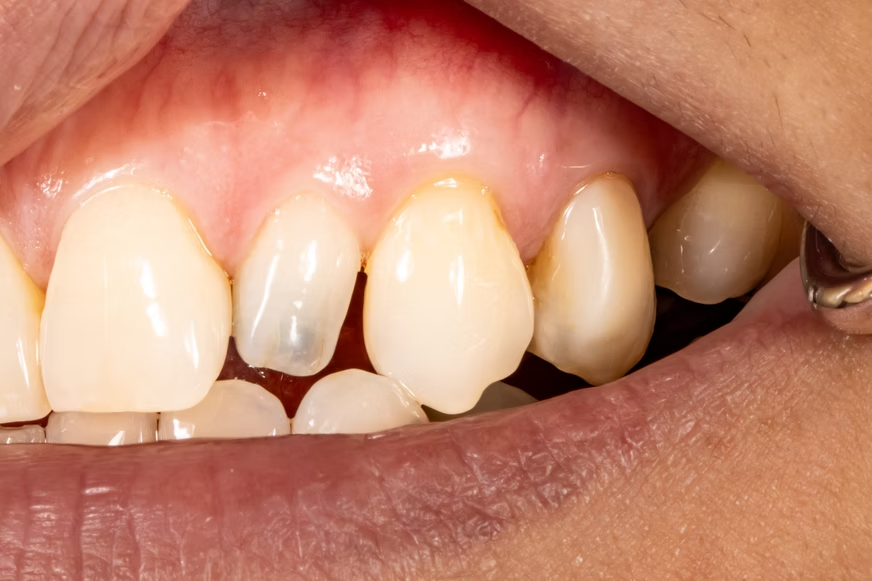
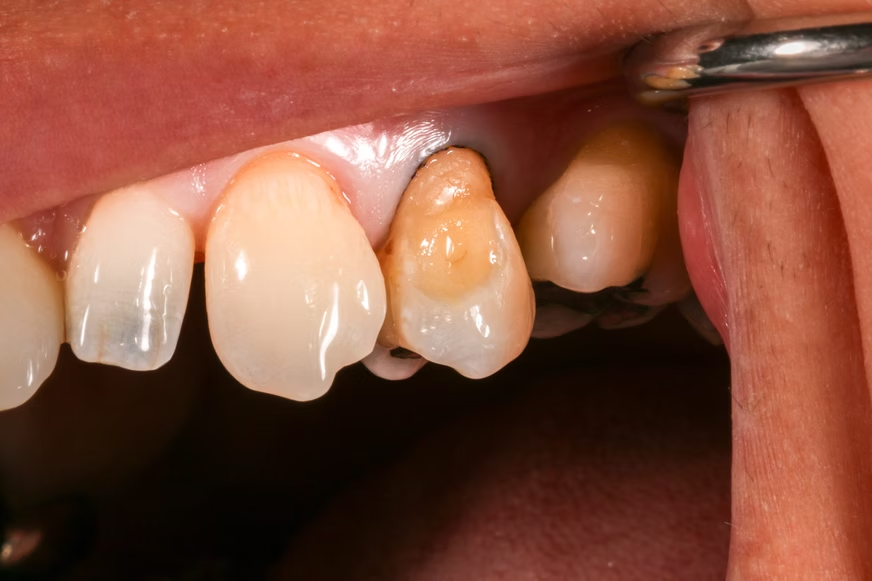
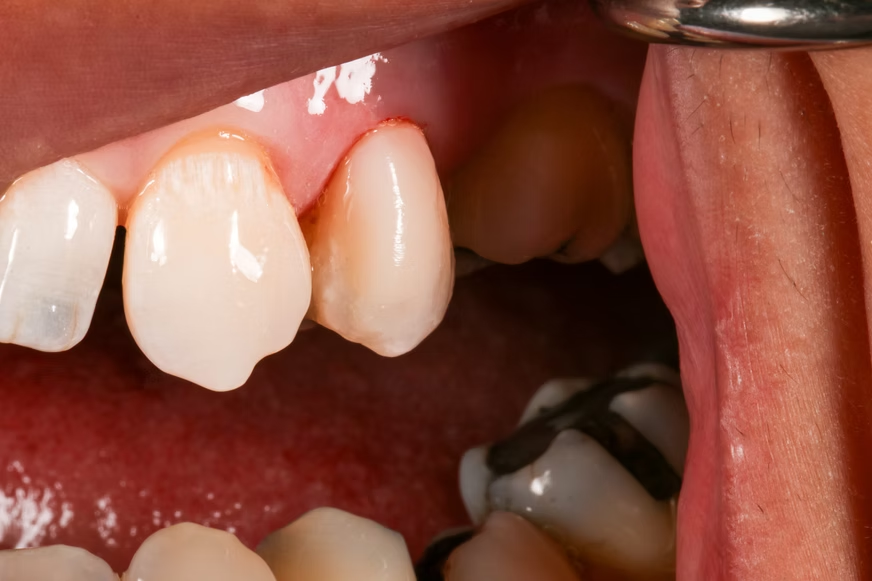
This cervical lesion treatment case at SOL Dental Arts in Maspeth, Queens addresses damaged tooth structure near the gumline caused by abfraction, erosion, wear, or decay. Cervical lesions can make teeth look notched, feel sensitive, and become more vulnerable over time if not treated. Tooth-colored restorative treatment in this area is designed to protect the tooth, improve comfort, and restore a healthier contour at the cervical margin.
These cases are often both functional and esthetic, because the goal is not only to seal and protect the tooth but also to make the restoration blend naturally with the surrounding enamel.
What Was Done?
- Evaluation of cervical wear / erosion / decay
- Tooth-colored restorative treatment
- Sealing and contour repair near the gumline
- Finishing for comfort and esthetics
How We Do It
Cervical lesions can cause sensitivity and structural weakness near the gumline, so bonded restorations are often used to protect the tooth and restore form.
Frequently Asked Questions
What Is A Cervical Lesion?
It is a defect near the gumline that may be caused by wear, stress, erosion, or decay.
Why Are These Areas So Sensitive?
Because the damaged area can expose dentin and compromise the natural protective surface of the tooth.
Can The Repair Match The Tooth?
Yes. Tooth-colored restorations are designed to blend in while protecting the area.
Related Treatment Resources
For treatment context, explore general dentistry, composite bonding, and front tooth cavity repaired with tooth-colored bonding.
Ask About A Similar Result
Every smile and treatment plan is individual. Meet our dentists or request an appointment to discuss what may be appropriate for you. You can also call our office. Individual results vary.
Understanding Non-Carious Cervical Lesions & Underlying Causes
Loss of tooth structure near the gumline can stem from several distinct etiological pathways that frequently overlap. Abfraction occurs when heavy biting forces or clenching cause micro-flexure of the tooth at its narrowest point near the gumline, leading to wedge-shaped notches in the enamel and dentin. Erosion involves chemical dissolution of enamel from dietary acids or gastric reflux, while mechanical abrasion results from overly aggressive toothbrushing with hard bristles.
At SOL Dental Arts in Maspeth, NY, our clinical evaluation focuses on identifying the root cause of cervical wear before placing restorations. Simply filling the notch without addressing heavy bite forces or aggressive brushing habits can lead to restoration dislodgement over time. By combining bite adjustments or nightguard therapy with protective restorations, our doctors ensure that your tooth structure remains stable and comfortable.
Key Factors Evaluated Before Restoring Cervical Wear
- Distinguishing between active cervical decay and non-carious lesions caused by flexure or acid erosion
- Checking occlusal stress and jaw movements to determine if heavy biting forces are flexing the tooth
- Assessing surrounding gumline health to ensure clean, moisture-controlled isolation during bonding
- Evaluating dentin exposure depth to select materials that insulate nerve endings against hot and cold discomfort
Advanced Restorative Materials & Subgingival Finishing
Restoring notched tooth margins near sensitive root surfaces demands specialized materials that flex naturally with the tooth while bonding securely to both enamel and dentin. Traditional rigid composite materials can sometimes pop out if the tooth continues to flex under heavy biting pressures. Utilizing resin-modified glass ionomers or flexible micro-hybrid composites provides better thermal expansion compatibility and continuous fluoride release near the root.
During your appointment at our practice in Maspeth, NY, our team isolates the cervical margin to protect the site from moisture. Before placing the restorative material, low-dose digital x-rays are reviewed to confirm that the internal nerve space is healthy and uncompromised. The tooth-colored restoration is then hand-sculpted to match your natural root contours and polished to a mirror finish, preventing plaque accumulation and keeping dental floss from catching.
Best Practices For Caring For Restored Cervical Margins
- Switch to an ultra-soft toothbrush and practice gentle circular brushing motions near the gumline
- Use a non-abrasive fluoride or desensitizing toothpaste to protect natural root surfaces from further wear
- Wear a custom-fitted nightguard if you exhibit signs of nighttime clenching to protect restorations from flexing stress
- Schedule routine professional check-ups so our team can evaluate restoration margins, inspect tissue health, and keep surfaces polished