
Composite Veneer Discolored Central Incisor
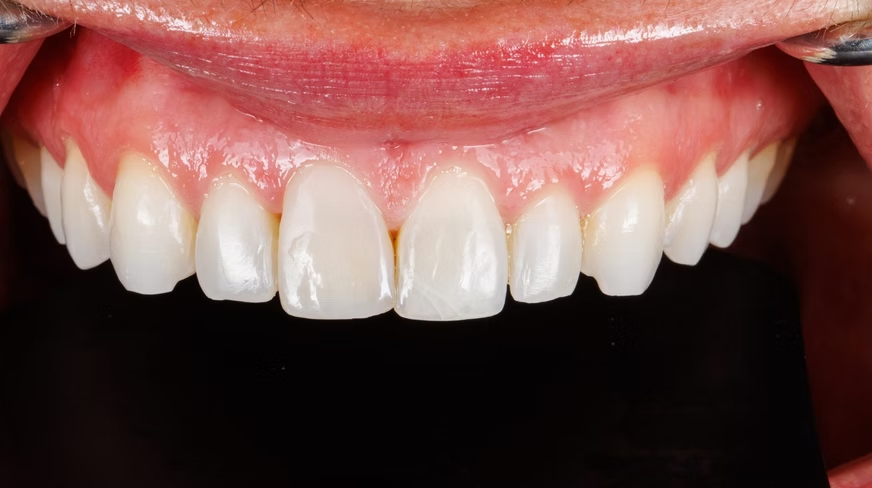
A conservative composite veneer masked a single discolored front tooth and helped it blend naturally with the surrounding smile.
A Discolored Front Tooth, Rebuilt With A Composite Veneer
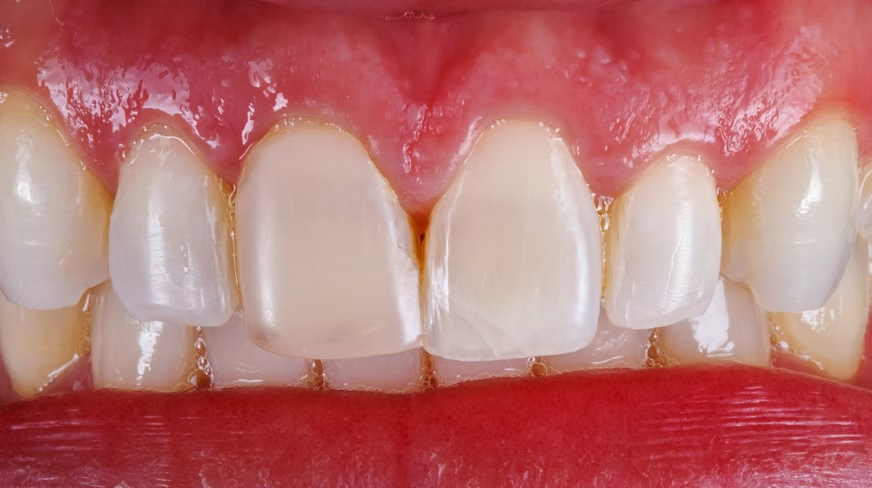
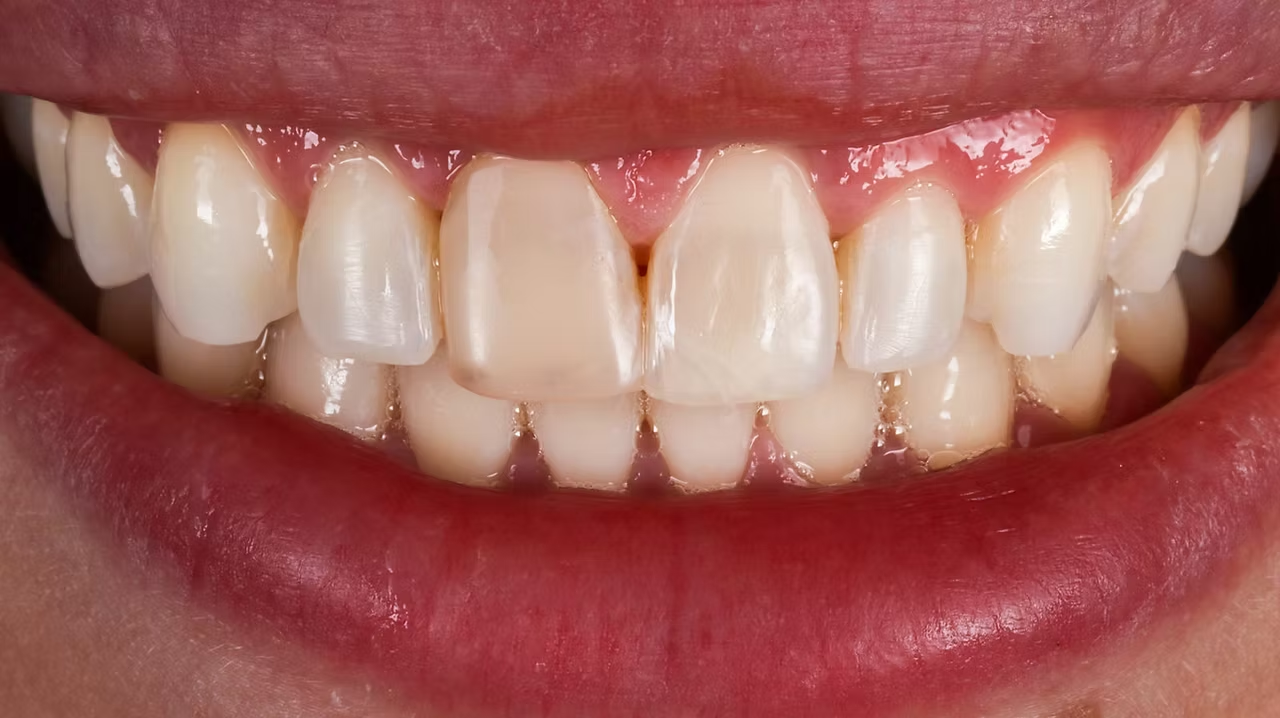
One upper front tooth looked dull and opaque next to its neighbor, throwing off the balance of the smile. We rebuilt its appearance with a single, minimally invasive composite veneer — tooth-colored resin layered and shade-matched to the tooth beside it, not whitened. Composite veneer in Maspeth, Queens.
When the two upper central incisors don’t match — one duller or more opaque than the other — the eye catches it immediately, because these teeth sit dead-center in the smile. Here, a single central incisor reads as flat, grey, and opaque beside its neighbor. A direct composite veneer is a conservative way to address this: tooth-colored resin is added to the front of the tooth and hand-sculpted to rebuild its color, translucency, and shape, an additive approach that removes little to no natural tooth.
It is shade-matched rather than whitened, and like all bonding, it can chip or stain over time and may need occasional polishing or repair; individual results vary.
What Was Done?
- Assessment of the discolored central incisor and shade
- Shade matching to the neighboring central incisor
- Direct composite veneer layered and hand-sculpted on the tooth
- Finishing and polishing for a natural surface and translucency
How We Do It
A direct composite veneer evens out the appearance of a single discolored tooth while preserving healthy enamel — a conservative alternative to a crown or porcelain veneer when the goal is to mask color and refine shape. It is additive, largely reversible, and can usually be completed in a single visit.
Frequently Asked Questions
Is A Composite Veneer Reversible?
Because little or no natural tooth is removed, a direct composite veneer is among the more conservative options. The added composite can be adjusted, repaired, or removed later if needed.
How Long Does A Composite Veneer Last?
Composite is durable but not indestructible — it can chip or pick up stains over time and may need occasional polishing, repair, or eventual replacement. A porcelain veneer is a longer-lasting, though less reversible, alternative.
Were The Teeth Whitened?
No. This case masked the color of a single tooth with a shade-matched composite veneer; it was not a whitening treatment, and any difference in brightness between photos is down to lighting.
Related Treatment Resources
For treatment context, explore composite bonding, porcelain veneers, composite veneer for a discolored front tooth, and composite bonding vs porcelain veneers.
Ask About A Similar Result
Every smile and treatment plan is individual. Meet our dentists or request an appointment to discuss what may be appropriate for you. You can also call our office. Individual results vary.
Diagnostic Protocol & Etiology Of Single Tooth Discoloration
Masking a dark or grey central incisor requires an in-depth clinical evaluation before placing any aesthetic resin. Single tooth discoloration often stems from prior internal trauma, deep calcification of the nerve space, or historical root canal therapy. If underlying pulp tissue is compromised or actively deteriorating, masking the exterior surface without addressing internal health can lead to unexpected complications over time.
At SOL Dental Arts in Maspeth, NY, our diagnostic evaluation begins with high-magnification intraoral imaging and low-dose digital x-rays to verify root stability, check surrounding bone support, and test nerve vitality. By confirming that the internal structures are healthy and quiet before treatment, our doctors ensure that your single-tooth composite veneer rests on a secure, stable, and disease-free substrate.

Critical Diagnostic Considerations For Discolored Incisors
- Performing vital pulpal testing and reviewing low-dose digital x-rays to verify internal tooth health
- Assessing the depth and hue of the intrinsic discoloration to select proper opaque masking resins
- Evaluating static and dynamic bite contacts so the new composite veneer surface avoids excessive biting pressure
- Isolating the discolored tooth carefully to prevent moisture contamination during adhesive bonding
Advanced Layering Mechanics & Masking Techniques
Neutralizing deep grey or opaque discoloration while maintaining a natural, lifelike appearance is one of the most challenging tasks in direct restorative dentistry. Simply applying a standard tooth-colored composite over a dark tooth often allows the underlying grey hue to show through. Conversely, using an overly thick opaque layer can leave the tooth looking flat and artificial compared to its adjacent neighbor.
Our doctors at our practice in Maspeth, NY overcome this challenge by applying specialized color-neutralizing opaquers in ultra-thin micro-layers. High-density dentin resins are then placed over the masked core, topped with translucent enamel layers that mimic natural light refraction and halo effects along the incisal edge. The restoration is contoured using fine diamond burs and polished to a high-gloss finish, ensuring your newly restored central incisor reflects light identically to the surrounding smile.
Long-Term Maintenance For Direct Composite Veneers
- Brush twice daily with a soft-bristled toothbrush and non-abrasive fluoride toothpaste to protect the high-gloss shine
- Floss daily along interproximal margins using a smooth, gentle technique to maintain surrounding gumline health
- Avoid using your restored front tooth to open packaging, bite fingernails, or crunch hard ice
- Wear a custom laboratory nightguard during sleep if you exhibit signs of clenching or grinding
- Schedule regular professional check-ups so our team can evaluate restoration margins and repolish composite surfaces as needed