
Bleaching Bonding Removal Black Triangle Closure
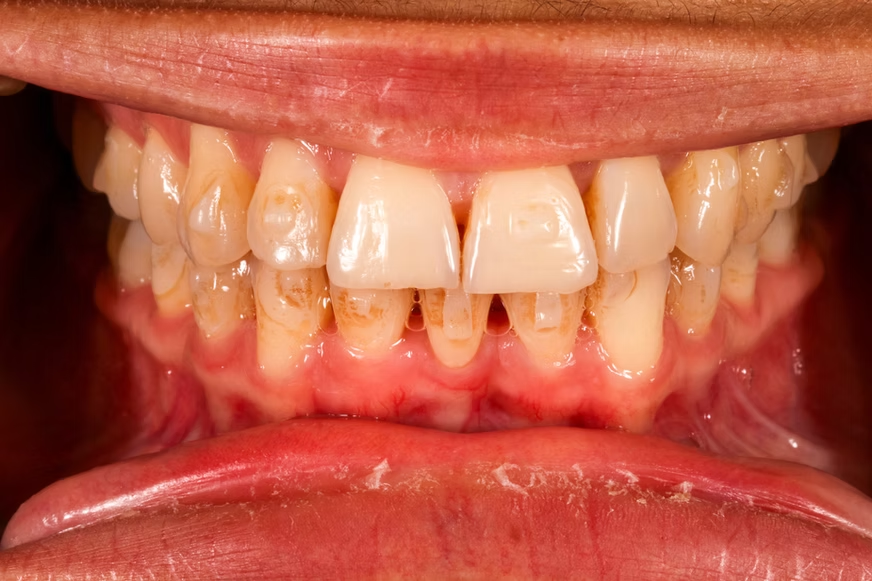
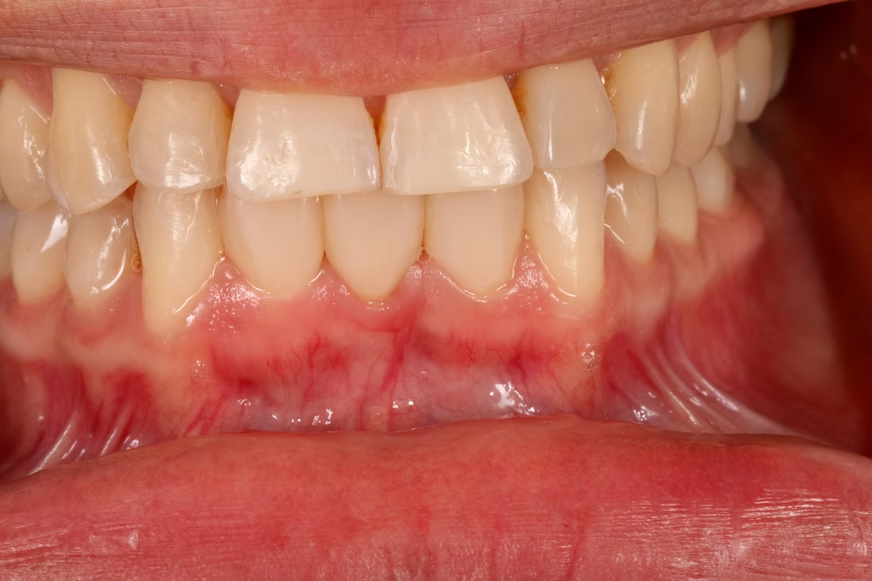
Teeth whitening, failing-bonding removal, and black-triangle closure combined in one cosmetic case — before and after.
Bleaching & Excess Failing Bonding Removal & Black Triangle Space Closure
This case combines three cosmetic steps — professional whitening, removal of failing bonding, and black triangle space closure in Maspeth, Queens — to refresh and rebalance the smile. Worn or discolored composite is replaced, while small dark gaps near the gumline are closed with carefully contoured bonding for a brighter, more even result.
Black triangles are the small dark spaces that can appear between teeth near the gumline, often after gum changes or orthodontic treatment. When older bonding has discolored or begun to fail, replacing it at the same time as whitening allows the new restorations to be matched to the brighter shade. The result is a smile that looks cleaner, more uniform, and more youthful while preserving healthy tooth structure.
What Was Done?
- Whitening to establish the target shade
- Removal of failing or excess bonding
- Black triangle space closure with contoured bonding
- Final shaping, finishing, and polish
How We Do It
Sequencing whitening before bonding allows the new restorations to be matched to the final, brighter tooth shade.

Frequently Asked Questions
What Causes Black Triangles Between Teeth?
They are usually caused by gum recession or changes in tooth shape and position, which leave a small open space near the gumline.
Should I Whiten Before Or After Bonding?
Whitening is generally done first, so new bonding can be matched to the final, brighter shade. Bonding itself does not change color with whitening.
Can Old Bonding Be Replaced?
Yes. Bonding that has discolored, chipped, or worn can be removed and replaced to refresh the smile.
Related Treatment Resources
For treatment context, explore Bioclear black triangle closure, composite bonding, Bioclear Method for black triangles, black triangle closure for lower front teeth.
Ask About A Similar Result
Every smile and treatment plan is individual. Meet our dentists or request an appointment to discuss what may be appropriate for you. You can also call our office. Individual results vary.
Clinical Rationale For Treatment Sequencing & Diagnostic Protocols
Combining teeth whitening, restoration replacement, and black triangle closure requires a strategic clinical sequence. Placing composite resin before whitening can lead to mismatched tooth shades, as dental materials do not lighten in response to bleaching gels. Removing discolored or leaking composite first ensures that underlying natural tooth structure is fully exposed and evaluated prior to whitening.
At SOL Dental Arts in Maspeth, NY, our diagnostic protocol begins with high-resolution intraoral photos and low-dose digital x-rays to verify that the teeth beneath older bonding are healthy and free of recurrent decay. Establishing a stabilized enamel baseline through professional whitening allows our doctors to select the ideal nano-hybrid composite shade when closing dark gingival spaces, producing a seamless, cohesive outcome.
Advantages Of A Multi-Step Cosmetic Treatment Plan
- Establishing an accurate target enamel shade through whitening before applying permanent composite materials
- Preventing marginal discoloration by completely eliminating compromised or leaking composite resin
- Restoring natural emergence profiles along the gumline to prevent future plaque accumulation and tissue irritation
- Maximizing enamel preservation by utilizing minimally invasive, additive bonding techniques rather than full crowns
Advanced Composite Injection & Soft Tissue Integration
Closing open gingival embrasures while replacing old bonding requires meticulous moisture control and careful contour management near delicate gum tissues. When old bonding is over-contoured, it creates rough ledges that collect plaque and irritate surrounding soft tissues. Replacing these worn materials with injection-molded composite ensures a smooth, convex shape that harmonizes with your gumline.
During your treatment at our practice in Maspeth, NY, our team isolates each tooth with anatomical clear matrices before applying warmed composite resin. This method fuses the material into a single, dense layer with zero internal voids or porosity. The newly contoured restorations are meticulously refined with fine diamond burs and polished to a mirror finish, ensuring dental floss glides easily across all surfaces.
Best Practices For Maintaining Combined Restorative & Whitening Results
- Avoid dark-pigmented food and drink like dark coffee, red wine, and soy sauce for forty-eight hours post-whitening
- Brush twice daily using a soft-bristled toothbrush and non-abrasive fluoride toothpaste to maintain surface polish
- Floss daily using gentle, curved movements around the gumline margins to keep surrounding soft tissues pink and healthy
- Schedule routine professional check-ups so our team can evaluate bond margins, inspect tissue health, and touch up enamel brightness