
Peg Laterals Reshaped With No-Prep 3D-Printed Crowns
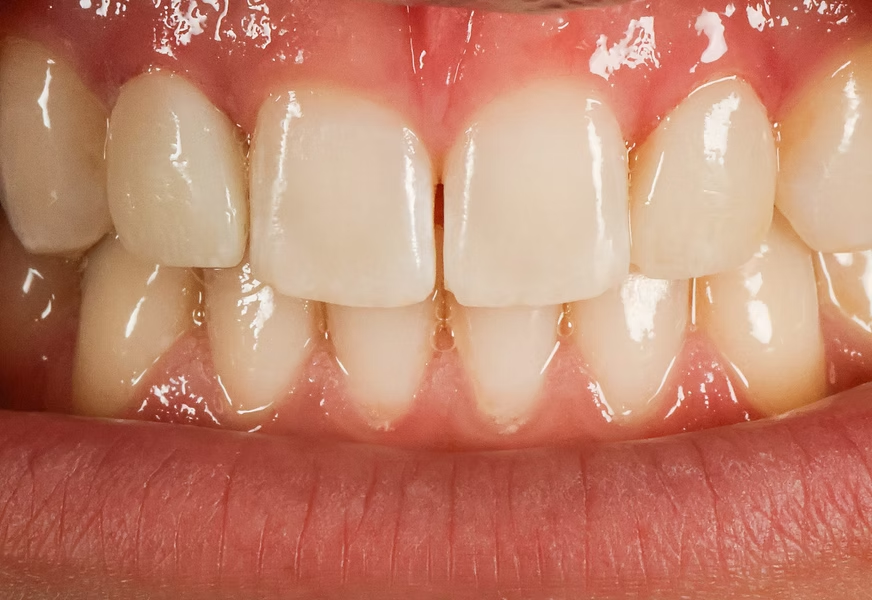
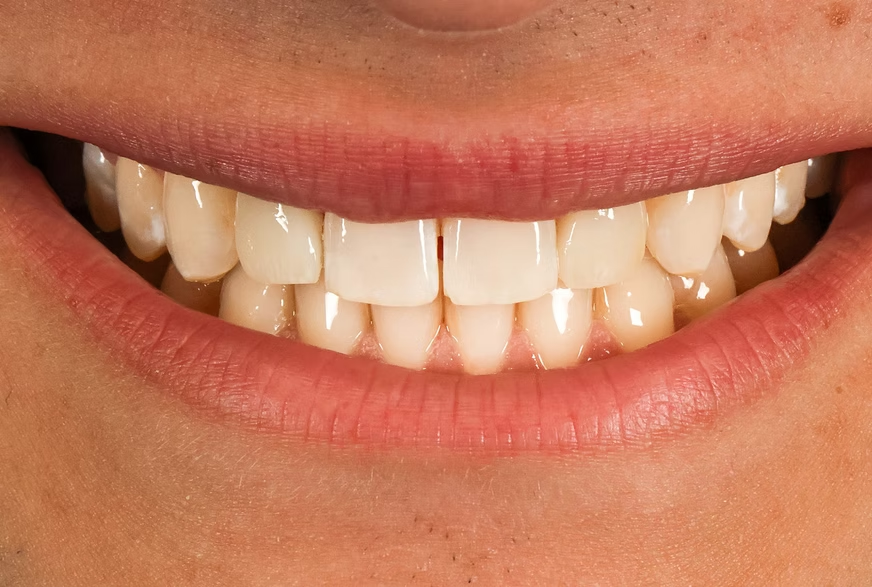
Two small, peg-shaped lateral incisors widened with no-prep, 3D-printed crowns — no drilling and no enamel removed. A conservative before-and-after.
No-Prep 3D-Printed Crowns For Peg Lateral Incisors
Two small, peg-shaped upper lateral incisors left narrow gaps on either side of the front teeth. They were widened and reshaped with no-preparation, 3D-printed crowns — a fully additive approach to peg lateral treatment in Maspeth, Queens, that removes no healthy enamel and requires no drilling.
Peg laterals are lateral incisors that develop smaller and more cone-shaped than usual, making the central teeth look larger and leaving spaces beside them. Because the teeth are healthy and simply undersized, a no-preparation approach is ideal: thin, custom 3D-printed crowns are bonded over the existing teeth to add the missing width and length, closing the spaces and balancing the arch without cutting tooth structure away.
What Was Done?
- Assessment of the undersized lateral incisors and spacing
- Digital design of custom, tooth-shaped restorations
- No-prep 3D-printed crowns bonded over the natural teeth
- Final adjustment, finishing, and polish
How We Do It
A no-preparation, additive design widens the peg laterals and closes the spaces while preserving every bit of healthy enamel — a conservative alternative to traditional veneers or crowns.

Frequently Asked Questions
What Is A Peg Lateral?
A peg lateral is a lateral incisor that forms smaller and more pointed than normal. It is a common, usually inherited variation that can leave spaces beside the front teeth.
What Does "No-Prep" Mean?
No-prep means the restorations are bonded to the existing teeth without drilling or removing healthy enamel, making the treatment highly conservative.
How Are 3D-Printed Crowns Different From Veneers?
They are digitally designed and printed to add width and length over an undersized tooth. In a no-prep case, they conserve natural tooth structure rather than shaving it down.
Related Treatment Resources
For treatment context, explore peg lateral treatment, dental crowns and bridges, peg lateral treatment with no-prep crowns, and same-day dental crowns in Maspeth.
Ask About A Similar Result
Every smile and treatment plan is individual. Meet our dentists or request an appointment to discuss what may be appropriate for you. You can also call our office. Individual results vary.
Developmental Etiology & Comprehensive Digital Diagnostics
Peg-shaped lateral incisors represent a localized form of microdontia, a genetic condition where one or more teeth develop noticeably smaller than normal anatomical standards. Because these undersized teeth lack typical width and surface area, they often create uneven space distribution across the anterior arch, causing adjacent central incisors to appear disproportionately large. Treating peg laterals requires careful consideration of root positioning and soft tissue contours before designing final restorations.
At SOL Dental Arts in Maspeth, NY, our diagnostic protocol centers on high-definition intraoral digital scanning and low-dose digital x-rays. By capturing 3D digital impressions, our doctors evaluate root alignment, bone height, and nerve vitality to confirm that the undersized teeth are biologically sound. This comprehensive evaluation ensures that additive, no-prep 3D-printed restorations sit securely on a healthy foundation without causing tissue impingement.
Clinical Diagnostic Advantages Of Digital 3D Scanning
- Capturing sub-millimeter anatomical tooth contours without messy, uncomfortable impression materials
- Reviewing low-dose digital x-rays to verify root length and bone support prior to restoration placement
- Evaluating bite clearance during jaw movement to prevent excessive chewing forces on newly printed crowns
- Mapping optical shade gradients digitally to match adjacent natural central incisors and canines

Advanced 3D-Printing Technology & Resin Bonding Protocol
Modern additive manufacturing allows for the fabrication of custom ceramic-infused resin crowns that feature ultra-thin margins and realistic light translucency. Traditional crown fabrication often required grinding down natural enamel to create room for thick material walls. In contrast, 3D-printed restorations can be designed at microscopic thicknesses, sliding directly over the peg-shaped core to rebuild full, natural dimensions while preserving original enamel completely.
During your treatment visit at our practice in Maspeth, NY, our team isolates the target teeth to create a completely dry field for bonding. The natural enamel surfaces are gently conditioned to maximize micro-mechanical adhesion. Our doctors apply high-strength resin cements to lock the custom 3D-printed crowns into place, carefully removing excess material before hand-polishing the gingival borders. This process creates a glass-like transition that glides smoothly against dental floss and supports healthy gum tissue adaptation.
Guidelines For Protecting No-Prep Printed Restorations
- Brush twice daily with a soft-bristled toothbrush and non-abrasive fluoride toothpaste to maintain surface polish
- Floss daily around restored margins using gentle, curved movements to keep surrounding gums healthy
- Refrain from using front teeth to bite fingernails, open packaging, or crunch on hard ice and candy
- Wear a custom-fitted laboratory nightguard during sleep if you show signs of nighttime grinding or clenching
- Attend regular professional check-ups so our team can evaluate bond integrity, inspect tissue health, and repolish crown margins