
Concealing A Dark Central Incisor With Bonding
Minimally invasive composite bonding for a dark central incisor in Maspeth, Queens, with careful shade matching and front-tooth contour refinement.
Dark Central Incisor Bonding Treatment
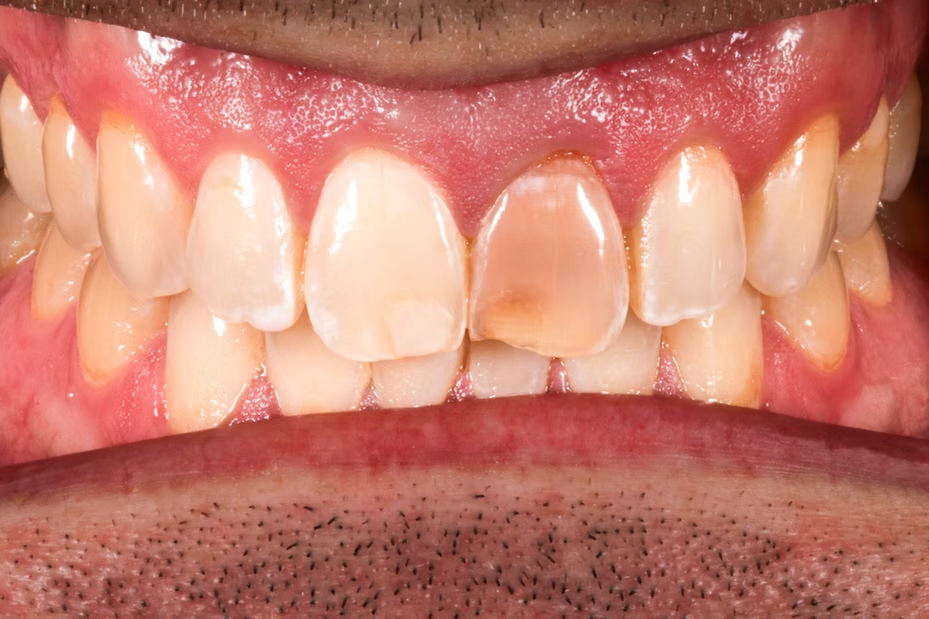
This case demonstrates minimally invasive composite bonding for the concealment of a dark central incisor. SOL Dental Arts in Maspeth, Queens focuses on natural shade integration, enamel preservation, and cosmetic precision for front-tooth improvements. Single-tooth bonding in the smile zone requires careful control of color, translucency, contour, and surface texture so the treated tooth blends with the neighboring teeth instead of looking opaque or overbuilt.
A dark or discolored central incisor can draw immediate attention because the central front teeth sit at the visual center of the smile. This conservative bonding case at SOL Dental Arts in Maspeth, Queens focuses on masking discoloration while preserving as much natural tooth structure as possible. In smile-zone dentistry, color correction must be approached carefully so the restored tooth does not appear flat, opaque, or mismatched relative to the adjacent central incisor.
Composite bonding can be used to improve the appearance of a dark central tooth while maintaining a minimally invasive philosophy. The goal is a balanced, esthetic result that blends naturally with the rest of the smile.
What Was Done?
- Evaluation of single-tooth discoloration
- Conservative bonding approach to improve appearance
- Shade and translucency management
- Finishing to blend with adjacent teeth
How We Do It
Single-tooth discoloration can often be improved with a conservative cosmetic approach when the patient wants immediate esthetic enhancement without aggressive treatment.

Frequently Asked Questions
Why Does One Front Tooth Get Darker Than The Others?
Discoloration can happen for multiple reasons, including prior trauma, aging dental material, or internal tooth changes.
Can Bonding Cover A Dark Tooth?
In selected cases, bonding can improve the appearance of a discolored tooth while preserving structure.
Will The Color Match The Other Front Tooth?
That is the goal, and careful shade selection plus contouring are key to creating a natural result.
Related Treatment Resources
For treatment context, explore composite bonding, porcelain veneers, composite veneers for a discolored front tooth, and composite bonding vs porcelain veneers.
Ask About A Similar Result
Every smile and treatment plan is individual. Meet our dentists or request an appointment to discuss what may be appropriate for you. You can also call our office. Individual results vary.
Etiology Diagnostics & Internal Nerve Space Assessment
Addressing a single dark central incisor requires an in-depth diagnostic evaluation before applying adhesive resin. Intrinsic darkening of a central front tooth often points to historical dental trauma, calcific metamorphosis within the dentin layers, or prior endodontic therapy. Masking dark discoloration on the surface without evaluating the internal pulp tissue can lead to missed biological complications over time.
At SOL Dental Arts in Maspeth, NY, our diagnostic protocol relies on high-resolution intraoral photos and low-dose digital x-rays to evaluate root stability, check bone levels, and verify internal nerve health. By confirming that the tooth root and surrounding tissues are quiet and healthy before treatment, our doctors ensure that your conservative bonding repair rests on a solid, biologically sound foundation.

Diagnostic Priorities For Dark Central Incisors
- Conducting nerve vitality testing and reviewing low-dose digital x-rays to verify internal root health
- Evaluating the chroma and depth of intrinsic dentin discoloration to select effective color-neutralizing resins
- Checking static bite contacts and dynamic jaw guidance to protect newly restored incisal edges during chewing
- Isolating the target tooth with precise moisture barriers to maintain maximum bond strength during resin application

Multi-Layering Techniques & Optical Blending Workflow
Neutralizing dark underlying dentin requires advanced hand-sculpting techniques and an expert understanding of light reflection. Natural central incisors possess complex optical properties, including internal dentin opacity, subtle surface characterization, and delicate edge translucency. Applying a single uniform composite shade over a discolored core often leaves the tooth looking flat, grey, or artificially thick.
During your appointment at our office in Maspeth, NY, our team hand-sculpts modern nano-hybrid composite materials using a micro-layering technique. Ultra-thin, specialized opaquers block out internal dark hues, followed by custom dentin and translucent enamel layers that recreate natural incisal halos. Our doctors then use fine diamond burs and multi-stage polishing pastes to sculpt surface micro-textures, yielding a glass-like finish that reflects ambient light identically to adjacent natural teeth.
Best Practices For Maintaining Restored Central Incisors
- Brush twice daily using a soft-bristled toothbrush and non-abrasive fluoride toothpaste to preserve surface luster
- Floss daily along interproximal margins using gentle, curved movements to protect surrounding soft tissues
- Avoid using restored front teeth to open packaging, bite fingernails, or crunch hard ice and candy
- Wear a custom-fitted laboratory nightguard during sleep if you show signs of nighttime teeth clenching or grinding
- Attend regular professional check-ups so our team can evaluate bond integrity, inspect tissue health, and repolish composite surfaces