
Composite Bonding Uneven Front Teeth
A small amount of tooth-colored composite evened out two uneven upper front teeth — minimally invasive bonding at SOL Dental Arts in Maspeth, Queens.
Evening Out Two Front Teeth With Minimally Invasive Bonding
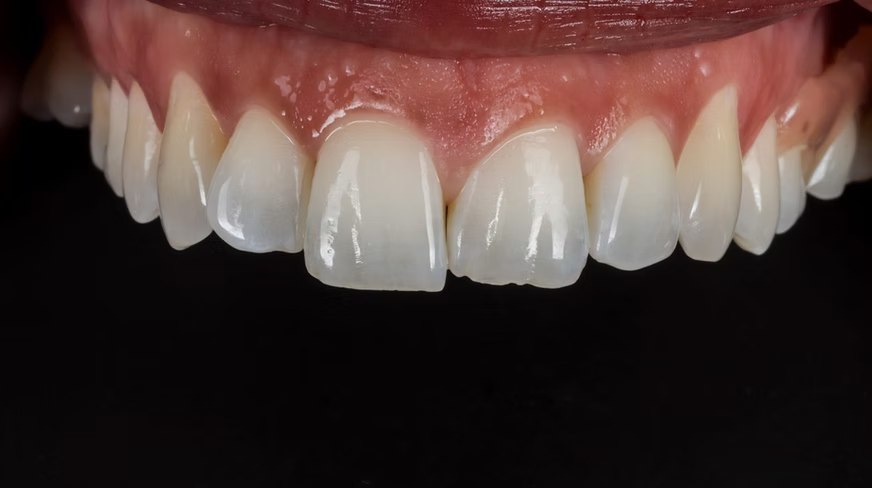
One upper front tooth sat slightly shorter and more uneven than its neighbor. We added a small amount of tooth-colored composite to even out the two central incisors — a minimally invasive, single-visit refinement. Composite bonding in Maspeth, Queens.
When the two upper central incisors differ in length or have a worn, uneven biting edge, the smile can look slightly off-balance even when the teeth are healthy. Because the teeth simply need a little added in the right places, composite bonding is an ideal fit: tooth-colored resin is added directly and sculpted by hand to even out the edges, an additive approach that removes little to no natural tooth.
What Was Done?
- Assessment of the uneven length and biting edges
- Shade matching to the natural teeth
- Direct composite bonding added and hand-sculpted on one front tooth
- Finishing and polishing for a natural surface
How We Do It
An additive, minimally invasive approach evens out the front teeth while preserving healthy enamel — a conservative alternative to veneers or crowns when only a small amount of reshaping is needed, and it can usually be completed in a single visit.

Frequently Asked Questions
Is Composite Bonding Reversible?
Because little or no natural tooth is removed, bonding is among the more conservative cosmetic options. The added composite can be adjusted, repaired, or removed later if needed.
How Long Does Composite Bonding Last?
Bonding is durable but not indestructible — it can chip or stain over time and may need occasional polishing or repair. Avoiding biting hard objects with the front teeth helps it last.
Were The Teeth Whitened?
No. This case evened out the shape and length of the front teeth; it was not a whitening treatment, and any difference in brightness between photos is down to lighting.
Related Treatment Resources
For treatment context, explore composite bonding, smile makeover planning, how long composite bonding lasts, and composite bonding vs porcelain veneers.
Ask About A Similar Result
Every smile and treatment plan is individual. Meet our dentists or request an appointment to discuss what may be appropriate for you. You can also call our office. Individual results vary.
Symmetry & Facial Proportion Analysis In Minimal Restorations
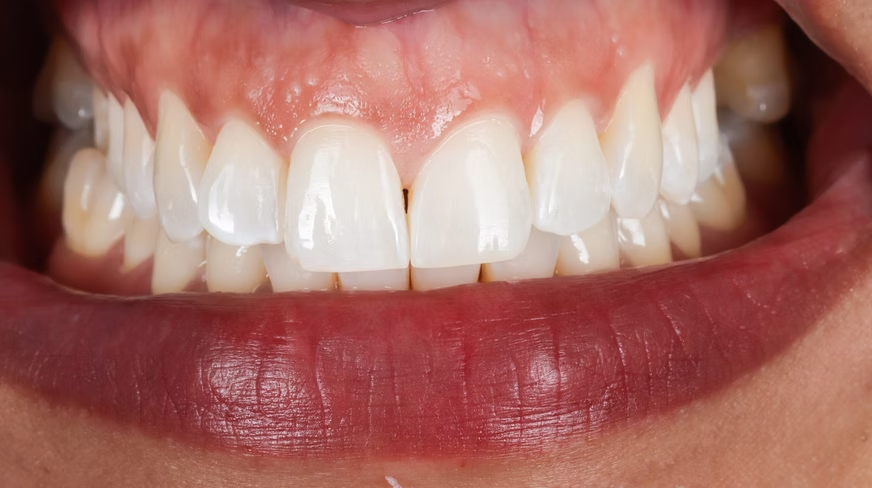
Even minor differences in the length or edge contour of the upper central incisors can draw unwanted attention, as the two front teeth serve as the visual focal point of the entire smile. Asymmetry often stems from localized enamel wear, prior minor trauma, or subtle differences in natural tooth eruption. Correcting this imbalance requires a thorough evaluation of how the teeth frame the face, align with the lip line, and function during everyday speech.
At SOL Dental Arts in Maspeth, NY, our doctors perform a comprehensive visual and structural analysis before applying any restorative material. Rather than aggressively altering healthy tooth structure, our clinical focus is on additive refinement. By carefully evaluating the width-to-height ratios of both central incisors, our team determines the exact amount of composite resin needed to establish visual harmony while fully preserving natural enamel.
Key Factors Evaluated During Uneven Edge Assessment
- Evaluating the smile arc to ensure the newly lengthened edge naturally follows the curvature of the lower lip
- Checking static and dynamic biting forces to verify that lengthened edges do not absorb excessive stress during chewing
- Analyzing the natural translucency and micro-texture of the adjacent enamel to ensure seamless material blending
- Reviewing low-dose digital x-rays when needed to confirm that internal nerve space and root foundations are completely healthy
Precise Layering Mechanics & Same-Day Finishing Protocols
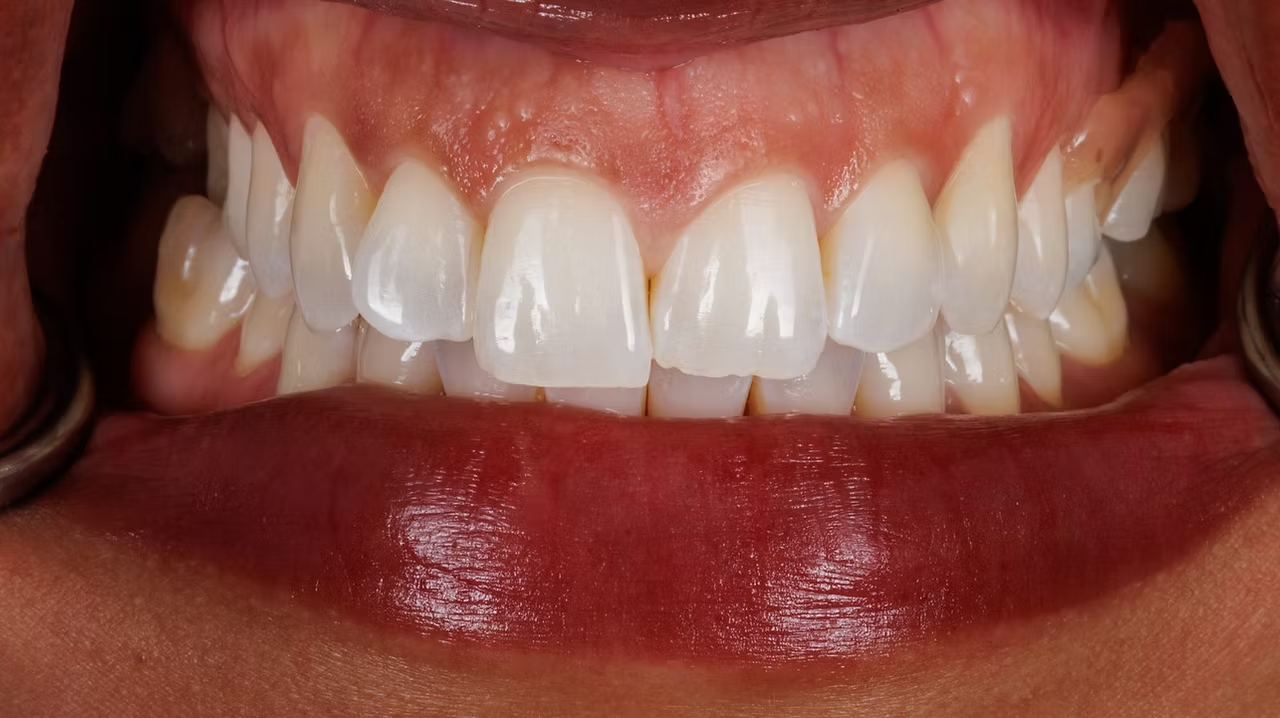
Sculpting composite resin on a single central incisor demands exceptional control over material translucency and light reflection. Natural teeth are not flat or uniform in color; they possess subtle dentin opacity near the center and delicate, light-refracting translucency along the biting edge. Utilizing a single composite shade can leave the repaired edge looking dull or noticeably different under varying light sources.
During your visit to our practice in Maspeth, NY, our team hand-sculpts high-density nano-hybrid composite in micro-layers directly onto the tooth surface. This careful layering technique recreates the natural depth, halo effects, and optical gradients of genuine enamel. Once the resin is cured, fine diamond burs and flexible contouring discs are used to refine the line angles. The restoration is then finished with multi-stage polishing pastes, creating a high-gloss, glass-like surface that feels completely smooth to the tongue and resists daily food and beverage staining.
Best Practices For Preserving Lengthened Composite Edges
- Brush twice daily with a soft-bristled toothbrush and non-abrasive fluoride toothpaste to maintain the smooth surface polish
- Floss daily along interproximal margins using gentle movements to protect surrounding soft tissues
- Avoid using your front teeth to bite into hard ice, crunch tough foods, or open packaging
- Wear a custom-fitted nightguard if you exhibit signs of nighttime grinding or clenching to cushion composite margins against shear stress
- Schedule regular professional check-ups so our team can monitor restoration integrity, evaluate tissue health, and repolish composite surfaces