
Multi-Surface Chipped-Tooth Repair With Bonding
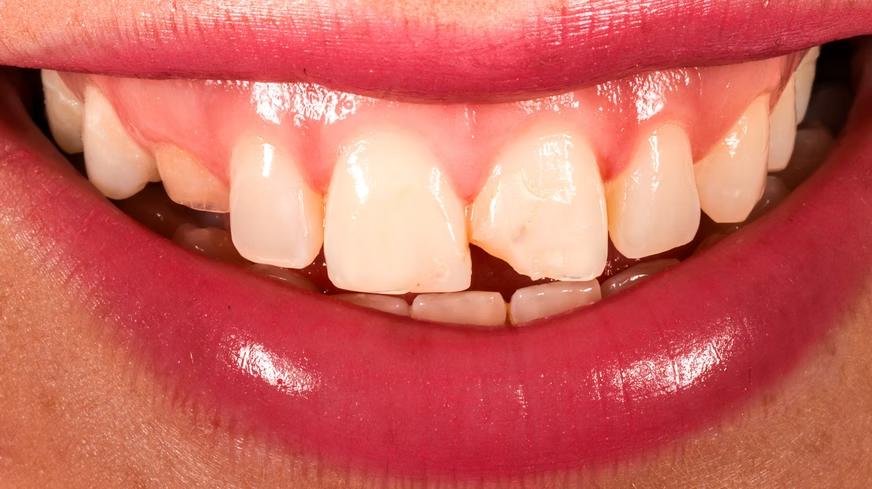
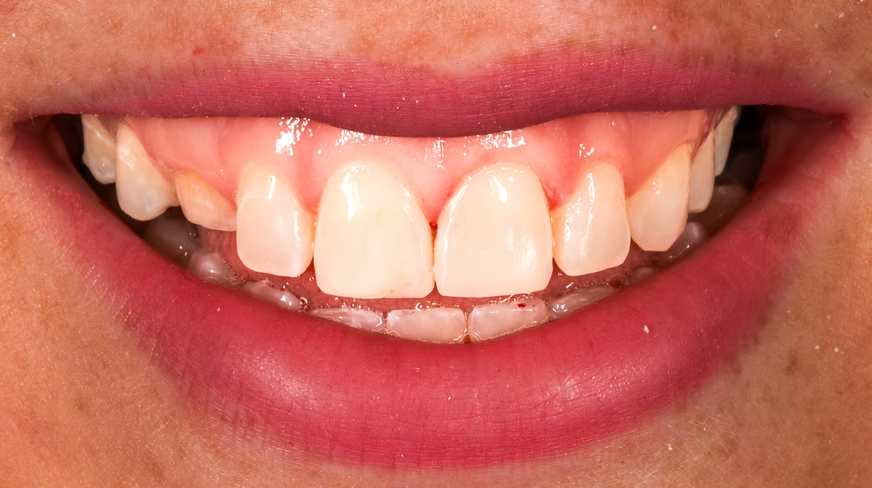
Multi-surface repair of a chipped tooth with composite bonding — a conservative restoration with a natural-looking result.
Chipped Tooth Multi-Surface Repair
When a chip affects more than one surface of a tooth — for example, both the edge and the front face — the repair must rebuild each area while keeping the tooth looking natural. This case uses multi-surface composite bonding in Maspeth, Queens, layering tooth-colored resin to restore shape, edge, and surface in a single conservative treatment.
Multi-surface damage can affect both appearance and comfort, creating rough edges and an uneven look. Composite bonding allows each affected surface to be rebuilt and blended together, restoring a smooth contour and a natural shade while conserving the healthy tooth structure that remains.
What Was Done?
- Assessment of the chipped surfaces
- Shade and contour planning
- Layered composite bonding of each surface
- Final shaping, finishing, and polish
How We Do It
Layering composite across multiple surfaces allows a chipped tooth to be rebuilt evenly without removing healthy structure.

Frequently Asked Questions
Can One Tooth Be Bonded In More Than One Place?
Yes. Composite bonding can rebuild several surfaces of the same tooth in a single visit.
Will The Repaired Tooth Feel Smooth?
Creating a smooth, comfortable surface that matches the neighboring teeth is one of the goals of the restoration.
Is Multi-Surface Bonding Still Conservative?
Yes. Bonding adds material to the tooth and generally preserves healthy structure rather than removing it.
Related Treatment Resources
For treatment context, explore composite bonding, emergency dentist care, same-day chipped front tooth bonding, and the dental emergency guide for Maspeth and Queens.
Ask About A Similar Result
Every smile and treatment plan is individual. Meet our dentists or request an appointment to discuss what may be appropriate for you. You can also call our office. Individual results vary.
Complex Structural Evaluation & Diagnostic Protocols
When physical trauma or severe wear fractures multiple planes of a single tooth, the clinical approach must extend far beyond simple aesthetic covering. Damage spanning both the incisal edge and facial or interproximal surfaces frequently exposes underlying dentin, heightening thermal sensitivity and increasing vulnerability to micro-leakage. Evaluating the remaining tooth structure requires a thorough investigation to confirm that the internal nerve space and root foundation remain healthy and uncompromised.
At SOL Dental Arts in Maspeth, NY, our diagnostic protocol incorporates high-magnification intraoral imaging and low-dose digital x-rays to verify root stability, check bone levels, and evaluate pulpal health. By thoroughly inspecting adjacent enamel for hidden hairline fractures before placing restorative materials, our doctors establish a clean, secure substrate. This meticulous diagnostic foundation ensures that multi-surface restorations stay bonded reliably under daily biting and chewing forces.
Critical Diagnostic Benchmarks For Multi-Surface Dental Fractures
- Conducting pulpal vitality testing and periodontal checks to verify that internal nerve tissue remains uninjured
- Reviewing low-dose digital x-rays to rule out subgingival root fractures or hidden interproximal decay
- Assessing facial and lingual line angles to plan accurate anatomical contours across all affected tooth planes
- Checking static and dynamic jaw clearance so multi-surface restorations avoid excessive force during mastication
Advanced Multi-Plane Layering & Surface Refinement
Reconstructing several planes on a single tooth chairside demands an expert understanding of light dynamics and tooth anatomy. Natural teeth feature intricate optical depth, blending opaque dentin cores with translucent incisal edges and micro-textured facial enamel. Applying a single composite shade across multiple surfaces often results in a flat, artificial restoration that stands out under ambient lighting.
Our doctors solve this challenge by applying high-density nano-hybrid composite resins using a specialized multi-layering technique. During your visit to our office in Maspeth, NY, our team hand-sculpts individual resin layers to reconstruct dentin opacity and enamel translucency across every broken plane. The restoration is then contoured with fine diamond burs and polished with multi-stage pastes, delivering an ultra-smooth, high-gloss finish that glides comfortably against your lips and resists daily food staining.
Long-Term Care Guidelines For Restored Multi-Surface Teeth
- Brush twice daily with a soft-bristled toothbrush and non-abrasive fluoride toothpaste to protect polished resin surfaces
- Floss daily along interproximal margins using gentle, curved movements to prevent plaque buildup near restored borders
- Avoid biting directly into hard objects, ice, or tough foods with restored teeth to shield composite margins from shear stress
- Wear a custom-fitted laboratory nightguard during sleep if you exhibit signs of nighttime grinding or clenching
- Schedule regular professional check-ups so our team can evaluate bond integrity, clean surrounding tissues, and repolish composite surfaces