
Central Incisor Corner Fracture Same-Day Bonding
A traumatic corner fracture on an upper central incisor was rebuilt the same day with minimally invasive composite bonding at SOL Dental Arts, Queens.
Same-Day Bonding For A Fractured Front-Tooth Corner
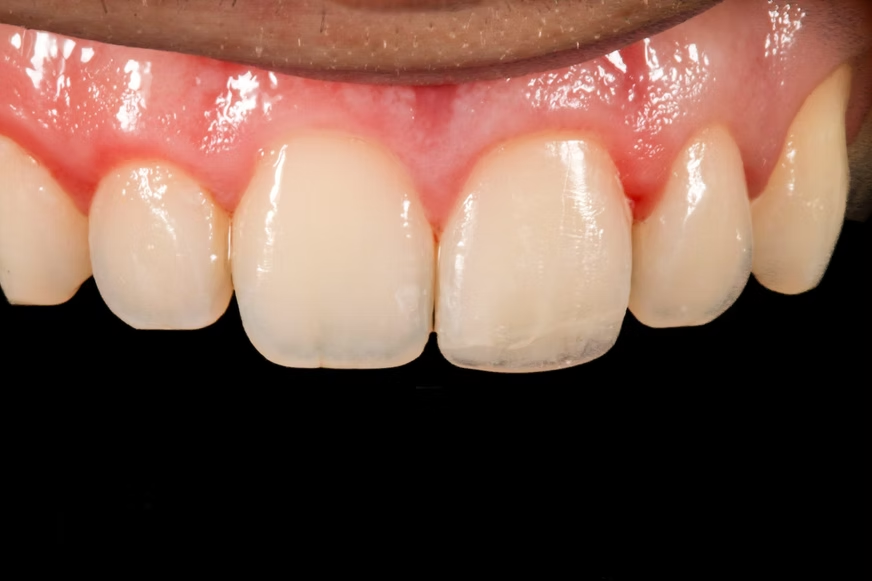
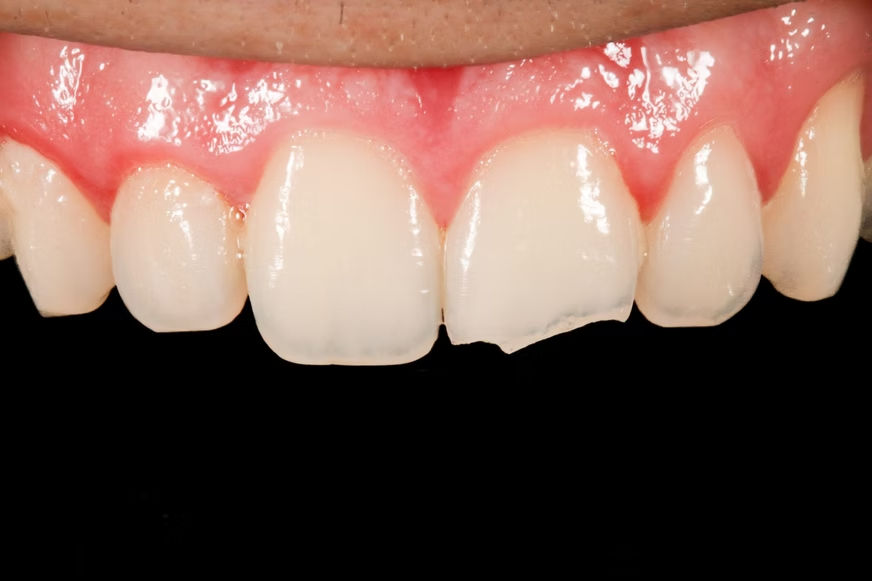
A knock chipped the corner of an upper central incisor, leaving a sharp, uneven biting edge. We rebuilt the missing corner the same day with tooth-colored composite — a minimally invasive, single-visit repair, shade-matched to the neighboring tooth. Composite bonding repair in Maspeth, Queens.
A fractured corner on a front tooth is one of the most common dental injuries, and when the break is limited to enamel and a little dentin, composite bonding is usually the most conservative fix: tooth-colored resin is added directly and sculpted by hand to rebuild the edge, an additive approach that removes little to no natural tooth and can often be completed in a single visit.
The bonding is shade-matched to the surrounding teeth rather than whitened, and like any bonding, it can chip or stain over time and may need occasional polishing or repair; individual results vary.
What Was Done?
- Assessment of the fractured corner and biting edge
- Shade matching to the neighboring central incisor
- Direct composite bonding added and hand-sculpted to rebuild the corner
- Finishing and polishing for a natural surface, completed the same day
How We Do It
For a corner fracture limited to enamel and a little dentin, composite bonding is usually the most conservative repair. Tooth-colored resin is added directly and sculpted by hand to rebuild the missing edge — an additive approach that removes little to no healthy tooth and can typically be completed in a single visit, a conservative alternative to a veneer or crown when only the fractured corner needs restoring.
Frequently Asked Questions
Is Composite Bonding Reversible?
Because little or no natural tooth is removed, bonding is among the more conservative repairs. The added composite can be adjusted, repaired, or removed later if needed.
How Long Does Composite Bonding Last?
Bonding is durable but not indestructible — it can chip or stain over time and may need occasional polishing or repair. Avoiding biting hard objects with the front teeth helps it last.
Were The Teeth Whitened?
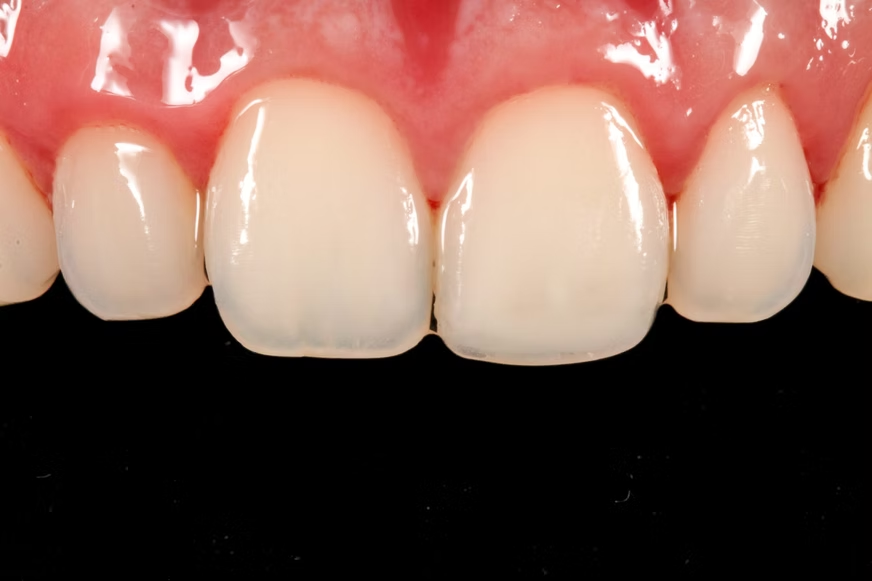
No. This was a repair to rebuild a fractured corner, shade-matched to the surrounding teeth; it was not a whitening treatment, and any difference in brightness between photos is down to lighting.
Related Treatment Resources
For treatment context, explore composite bonding, emergency dentist care, same-day chipped front tooth bonding, and the dental emergency guide for Maspeth and Queens.
Ask About A Similar Result
Every smile and treatment plan is individual. Meet our dentists or request an appointment to discuss what may be appropriate for you. You can also call our office. Individual results vary.
Immediate Clinical Assessment & Structural Diagnosis
A sudden impact to a central incisor requires careful evaluation before any restorative resin is placed. Even when a fracture appears minor and isolated to the incisal corner, physical trauma can transmit forces through the root structure, potentially causing internal pulpal shock or micro-fractures within the supporting dentin. Addressing the visible chip on the same day satisfies immediate cosmetic concerns, but verifying internal health ensures the tooth remains stable over time.
When treating traumatic injuries at our office in Maspeth, NY, our clinical team performs a comprehensive assessment that includes vital pulpal testing, mobility checks, and low-dose digital x-rays. This diagnostic diligence confirms that the tooth root and surrounding bone structure are completely sound. By taking the time to rule out unseen nerve or structural compromise, we provide a solid, healthy foundation for immediate cosmetic repair.
Crucial Steps In Evaluating Same-Day Trauma Bonding
- Evaluating nerve vitality and monitoring surrounding soft tissues for localized traumatic inflammation
- Reviewing low-dose digital x-rays to verify that the tooth root and surrounding alveolar bone are free of hidden fractures
- Isolating the fractured area carefully to maintain a completely dry surface during adhesive placement
- Analyzing biting clearance during speech and jaw movements so the new composite corner avoids heavy forces
Precise Micro-Layering & Finishing Techniques
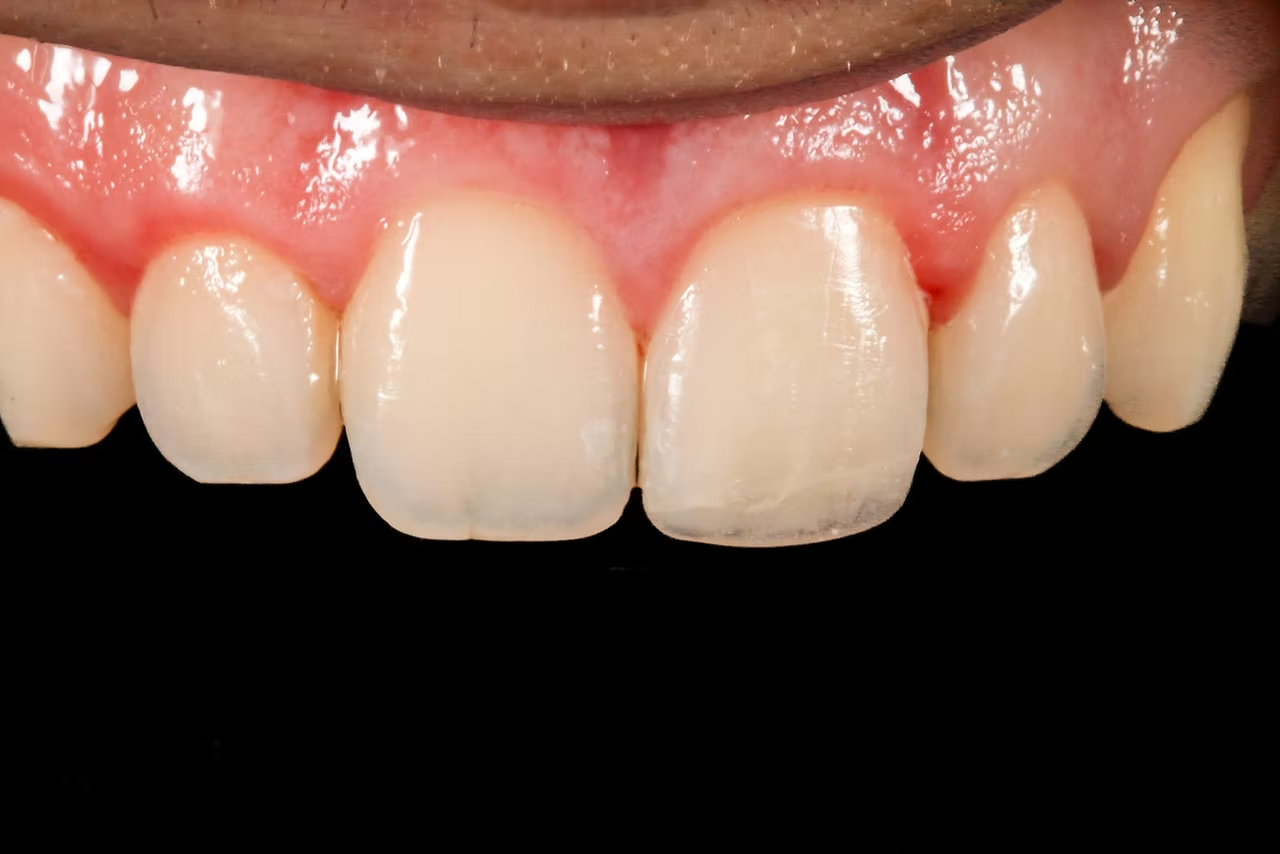
Restoring a single central incisor corner requires artistic precision to blend composite resin seamlessly with natural tooth structure. Central incisors exhibit subtle optical characteristics, including internal dentin opacity, varying surface characterization, and delicate edge translucency. Applying a single uniform composite shade often results in a flat or noticeable repair.
At SOL Dental Arts in Maspeth, NY, our doctors hand-sculpt nano-hybrid composite materials using a micro-layering technique. By carefully mimicking the natural internal shading and translucency of your tooth, the newly restored corner absorbs and reflects light identically to the surrounding enamel. The restoration is then meticulously contoured with fine diamond burs and polished to a high-gloss, smooth finish, ensuring that the biting edge feels entirely natural against your lips and tongue.
Best Practices For Caring For Bonded Tooth Corners
- Brush twice daily with a soft-bristled toothbrush and non-abrasive toothpaste to preserve the smooth, polished surface
- Avoid using your front teeth to bite into hard objects, ice, or tough foods that could apply excess force to the bonded corner
- Wear a custom nightguard if you show signs of nighttime clenching or grinding to cushion composite edges from shear stress
- Attend routine professional check-ups so our team can evaluate the bond integrity and repolish the resin as needed