
Fractured Central Incisors Bonding
See how fractured front teeth were restored with minimally invasive composite bonding for an even, natural smile at SOL Dental Arts.
Restoring Fractured Front Teeth With Composite Bonding
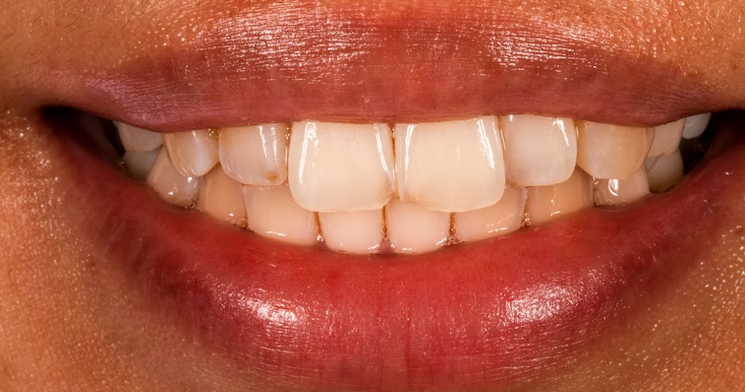
Trauma fractured the corner of an upper central incisor, leaving the two front teeth uneven. Our team rebuilt the edge with minimally invasive, tooth-colored composite bonding in a single visit — shown here still intact about a year later. Cosmetic bonding in Maspeth, Queens.
A chip or fracture to a front tooth is one of the most common and most noticeable dental injuries, and many can be repaired conservatively — without crowns or drilling away healthy enamel. After trauma broke and shortened one of this patient’s upper central incisors, our team rebuilt the fractured corner and incisal edge with tooth-colored composite bonding, shade-matched to the natural tooth (this was a repair, not a whitening treatment).
The two central incisors are even and symmetric again; the work was completed chairside in one visit, and a follow-up about a year later shows the bonding intact. Individual results vary.
What Was Done?
- Evaluation of the fractured tooth and bite
- Shade matching to the natural tooth color
- Direct composite bonding to rebuild the fractured corner and incisal edge
- Reshaping so the two central incisors matched in length and contour — one visit
How We Do It
Composite bonding is a conservative, tooth-preserving way to repair many fractures: resin is added directly to the remaining tooth with little to no removal of healthy enamel, no lab, and no impressions. It is also reversible and easily repaired, which makes it a strong first option for a traumatic chip on a front tooth.
Frequently Asked Questions
Can A Chipped Or Fractured Front Tooth Be Fixed Without A Crown?
Often, yes. Many small-to-moderate fractures can be repaired with composite bonding, which adds tooth-colored resin directly to the tooth and preserves healthy enamel.
How Long Does Bonding On A Front Tooth Last?
It varies. Bonding can last for years with care, but it can chip or stain over time and may need occasional polishing, repair, or eventual replacement. In this case, the repair was still intact at a follow-up about a year later.
Is Bonding Or Porcelain Better For A Fractured Tooth?
Bonding is more conservative and reversible and is a great first option for many fractures. For larger breaks, heavy wear, or when extra strength is needed, porcelain veneers or crowns are a longer-lasting but less reversible alternative.

Related Treatment Resources
For treatment context, explore composite bonding, porcelain veneers, a related same-day chipped front tooth bonding case, the education guide on bonding fractured front teeth, and our comparison of composite bonding vs. porcelain veneers.
Ask About A Similar Result
Every smile and treatment plan is individual. Meet our dentists or request an appointment to discuss what may be appropriate for you. You can also call our office. Individual results vary.
Diagnostic Integrity & Structural Assessment After Incisor Trauma
When a front tooth suffers a traumatic break, addressing the visible gap or rough edge is only one part of proper clinical management. Before placing restorative material, our doctors prioritize evaluating the internal health of the tooth and its supporting structures. Impact forces can create micro-fractures in the surrounding enamel, cause deep internal trauma to the pulp tissue, or disrupt the delicate periodontal ligament anchoring the root.
At SOL Dental Arts in Maspeth, NY, every trauma evaluation includes high-resolution digital imaging and low-dose digital x-rays to verify root stability, check for hidden root fractures, and establish a baseline for nerve vitality. By taking the time to thoroughly assess the underlying tooth before bonding, our team ensures that the structural foundation is entirely sound, allowing your cosmetic repair to remain comfortable and secure over the long term.

Essential Steps In Evaluating Anterior Tooth Fractures
- Testing nerve vitality and assessing surrounding bone levels to confirm the root structure remains healthy
- Inspecting adjacent teeth for unseen hairline cracks or micro-trauma using high-magnification intraoral cameras
- Evaluating static and dynamic bite clearance to ensure the restored incisal edge does not absorb excessive force when chewing
- Selecting high-density, nano-hybrid composite materials engineered to withstand everyday biting pressures while maintaining a natural sheen
Artistic Layering & In-House Precision Finishing
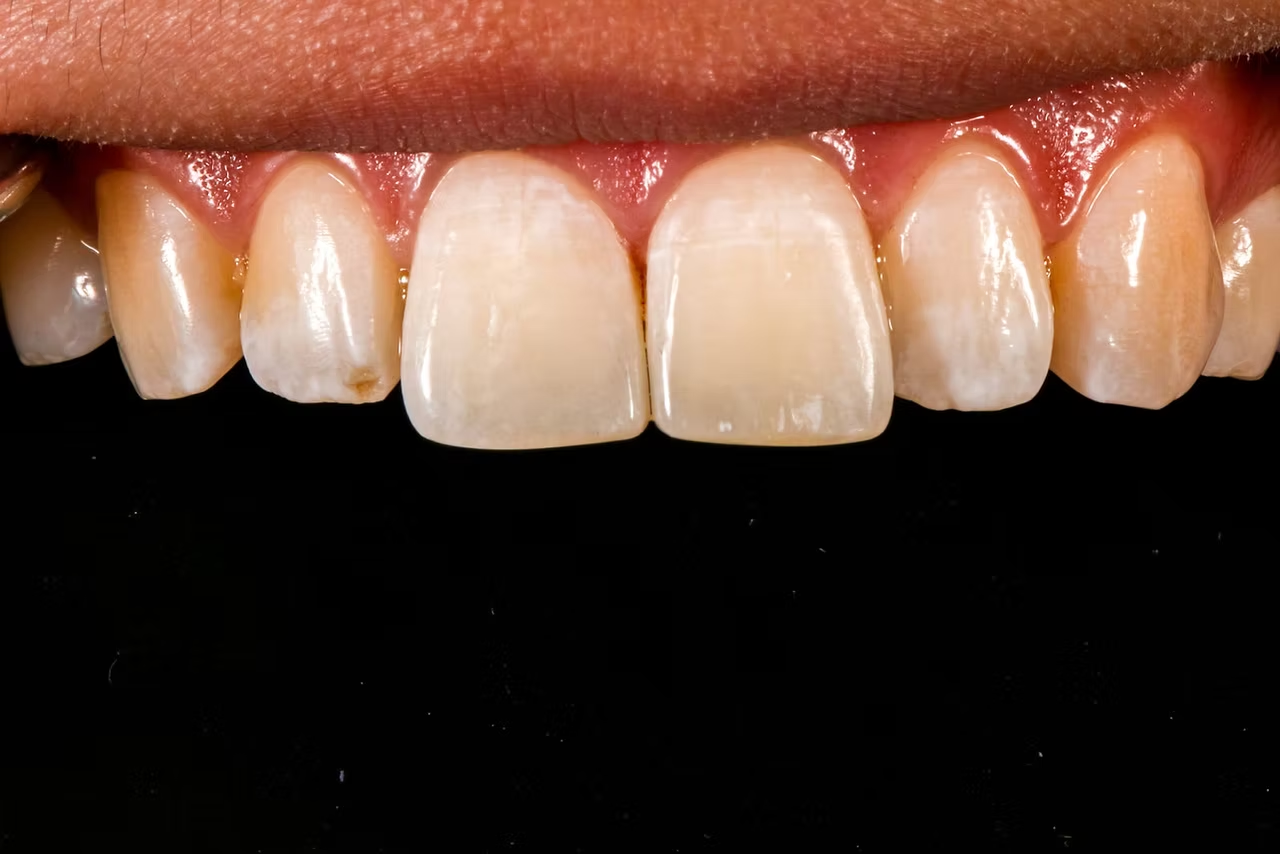
Rebuilding a fractured central incisor chairside requires a refined artistic approach combined with deep knowledge of dental anatomy. Natural central incisors feature nuanced optical qualities, including distinct internal dentin opacity, subtle translucency along the biting edge, and fine surface texture that reflects light naturally. Simply applying a single shade of composite resin often results in a flat, unnatural appearance that stands out when you smile.
Our doctors solve this challenge by applying composite materials in delicate, anatomical micro-layers. By meticulously mimicking internal dentin structures and topping them with translucent incisal resins, the restoration blends seamlessly with your natural enamel. Patients visiting our office in Maspeth, NY appreciate that our team completes these intricate, hand-sculpted restorations during a single visit, allowing you to walk out with a complete, fully restored smile without waiting on an outside lab.
Long-Term Care For Restored Front Teeth
- Brush twice daily with a soft-bristled toothbrush and non-abrasive toothpaste to preserve the high-gloss surface polish
- Avoid using your restored front teeth to bite into exceptionally hard foods, ice, or non-food items like packaging
- Wear a custom-fitted nightguard if you show signs of nighttime clenching or grinding to shield delicate bonded margins from wear
- Schedule regular professional check-ups so our team can evaluate the bond integrity, clean surrounding tissues, and repolish the resin as needed