
Diastema Recreation Bonding
A patient missed her natural front-tooth gap. See how SOL Dental Arts recreated a midline diastema with composite bonding in Maspeth, Queens.
Recreating A Natural Midline Gap With Composite Bonding
A patient who had the natural gap between her front teeth bonded closed years ago missed her original smile — so our team recreated the midline diastema with composite bonding in a single visit. Cosmetic bonding in Maspeth, Queens.
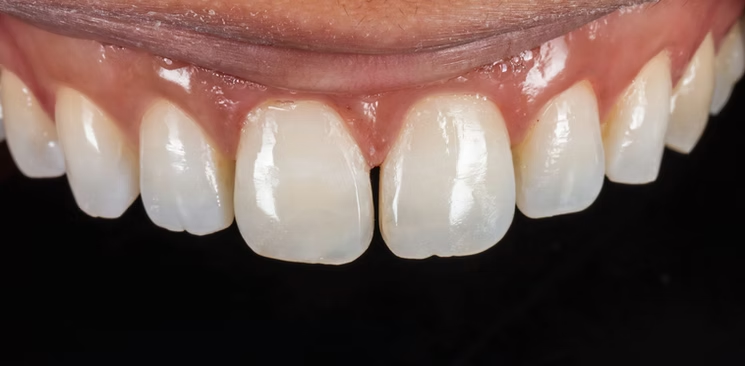
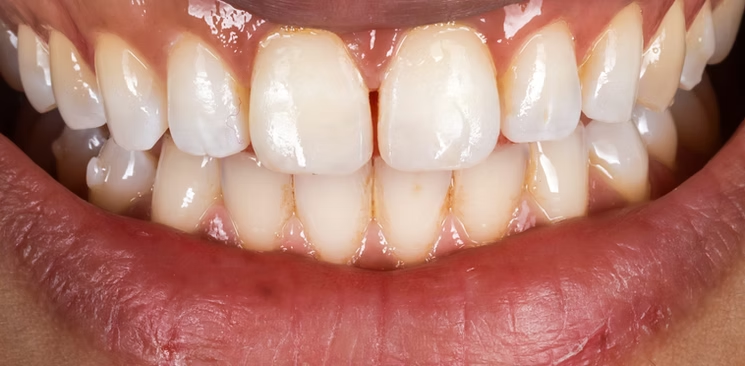
Not every smile goal is about closing gaps. This patient had her natural midline diastema bonded closed years earlier and missed the smile she identified with. Using composite bonding, our team refined the old bonding and reshaped the inner edges of the two upper central incisors to reopen a clean, natural-looking gap — matching the resin to her tooth color (not a whitening treatment). The approach is additive, conservative, and adjustable: the space can be bonded closed again later if she changes her mind.
A midline diastema is a normal variation, not a flaw, and individual results vary.
What Was Done?
- Assessment of the existing closed-gap bonding on the central incisors
- Shade matching to the surrounding teeth
- Refinement of the old bonding and reshaping of the mesial edges
- Recreation of a clean, natural-looking midline diastema in a single visit
How We Do It
The patient simply missed her natural gap and wanted it back. Composite bonding is as capable of recreating a diastema as closing one, and because it is additive, it works with the existing bonding rather than removing healthy tooth — and it stays reversible, so the space can be re-closed in the future if her preference changes.
Frequently Asked Questions
Can A Tooth Gap Be Recreated After It Was Closed?
Yes. Composite bonding can recreate a midline diastema by reshaping the inner edges of the front teeth, just as it can close one. In this case, the previous closure was routine and refined to reopen the natural gap.
Is A Gap Between The Front Teeth A Problem?
A small midline diastema is a normal, common variation, not a flaw, and generally is not a functional issue. Whether to keep, close, or recreate it is a personal esthetic choice.
Is This Reversible?
Because composite bonding is additive, the space can be reshaped or bonded closed again in the future if the patient's preference changes.
Related Treatment Resources
For treatment context, explore composite bonding, Bioclear black triangle closure, related space-management cases including Bioclear space closure with composite bonding and black triangle space closure, the education guide on recreating a diastema with bonding, and our comparison of composite bonding vs porcelain veneers.
Ask About A Similar Result
Every smile and treatment plan is individual. Meet our dentists or request an appointment to discuss what may be appropriate for you. You can also call our office. Individual results vary.
Personal Identity & Aesthetic Restraint In Cosmetic Dentistry
Cosmetic dentistry is frequently associated with uniform alignment, closing spaces, and creating perfectly standardized arches. However, at SOL Dental Arts, we recognize that true aesthetic excellence honors individual character and personal identity. A midline diastema is often a defining feature of a person’s facial presentation, carrying personal, cultural, or familial significance. When dental work removes a natural gap, it can inadvertently alter how a patient sees themselves in the mirror.
Our philosophy emphasizes patient autonomy and conservative care. Reopening a previously closed space requires the same level of diagnostic judgment, material selection, and artistic precision as placing a new restoration. By carefully evaluating the underlying enamel and previous dental work at our practice in Maspeth, NY, our doctors ensure that modifying existing composite resin preserves healthy tooth structure while restoring the exact proportion and symmetry you desire.

Key Factors In Recreating Natural Tooth Proportions
- Analyzing the width-to-height ratio of central incisors to ensure the reopened space maintains balanced facial aesthetics
- Contouring the mesial composite margins smoothly to prevent sharp edges that could trap plaque or irritate delicate gum tissue
- Selection of nano-hybrid composite materials that mirror the natural translucency and opalescence of natural enamel
- Verifying bite alignment during speech and chewing so the refined composite borders remain strong and stable over time
Clinical Considerations & In-House Digital Planning
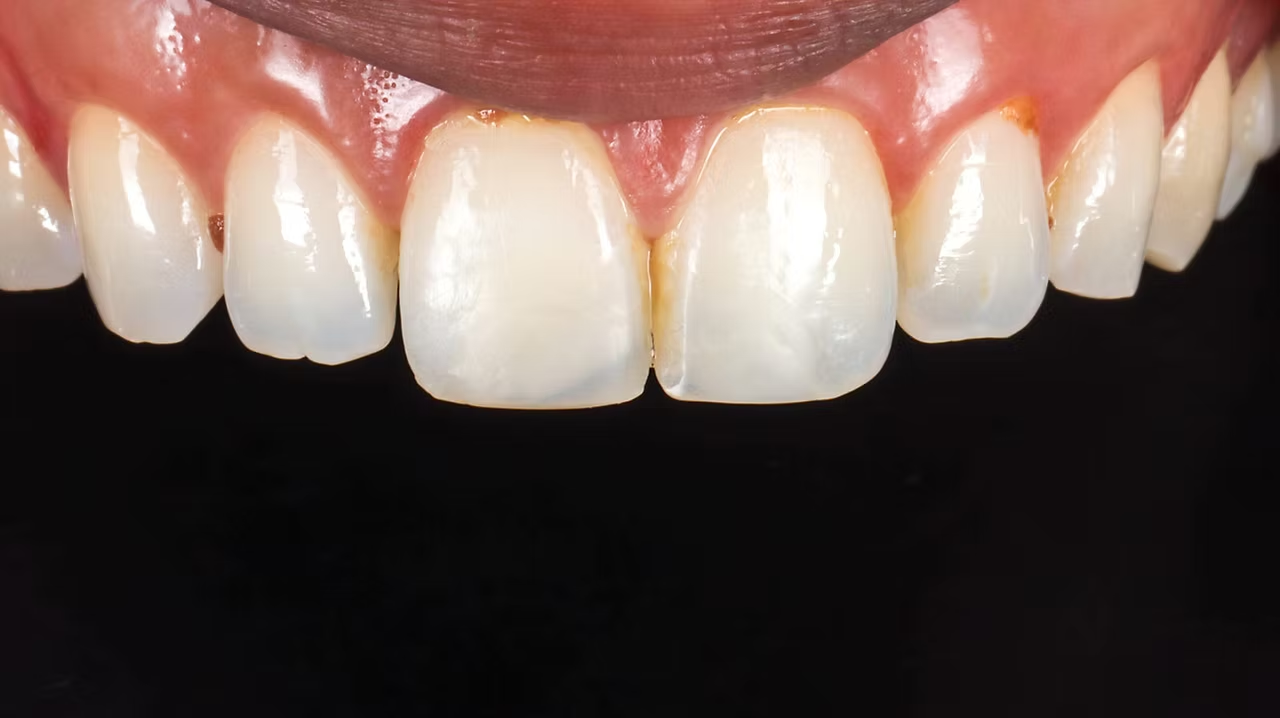
Recreating a clean midline gap requires careful execution to avoid leaving micro-roughness or unnatural angles where the teeth meet. Before beginning the procedure, our doctors evaluate existing dental work using high-resolution digital imaging and low-dose digital x-rays to verify that the underlying tooth structure and bone support are entirely healthy. This thorough check ensures that adjusting the resin will not compromise the teeth beneath.
Using advanced intraoral scanners, we capture the precise contours of your teeth to plan the ideal gap width down to fractions of a millimeter. During treatment, specialized polishing discs, fine diamond burs, and multi-stage polishing pastes are used to blend the composite seamlessly into the natural enamel. This creates an ultra-smooth finish that feels entirely natural to the tongue and resists daily coffee or tea staining.
Long-Term Care & Maintaining Custom Bonding Results
- Practice daily thorough flossing using proper technique around the restored edges to maintain healthy gumline tissues
- Use a non-abrasive toothpaste and soft-bristled toothbrush to preserve the high-gloss polish on the composite surface
- Wear a custom nightguard if you show signs of nighttime grinding to protect the hand-sculpted composite edges from wear
- Schedule routine professional check-ups at our Maspeth, NY office to allow our team to inspect, clean, and repolish your composite restorations